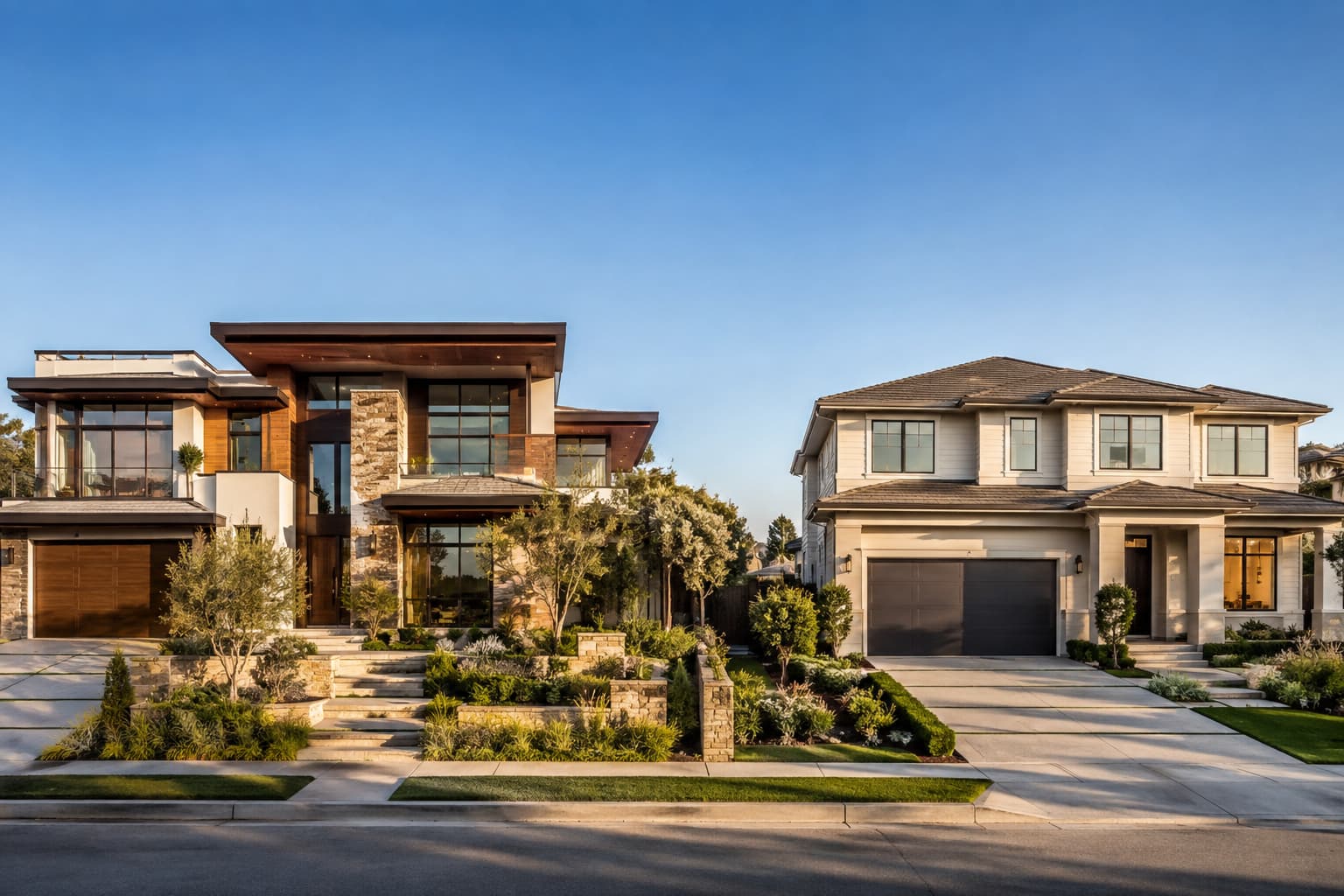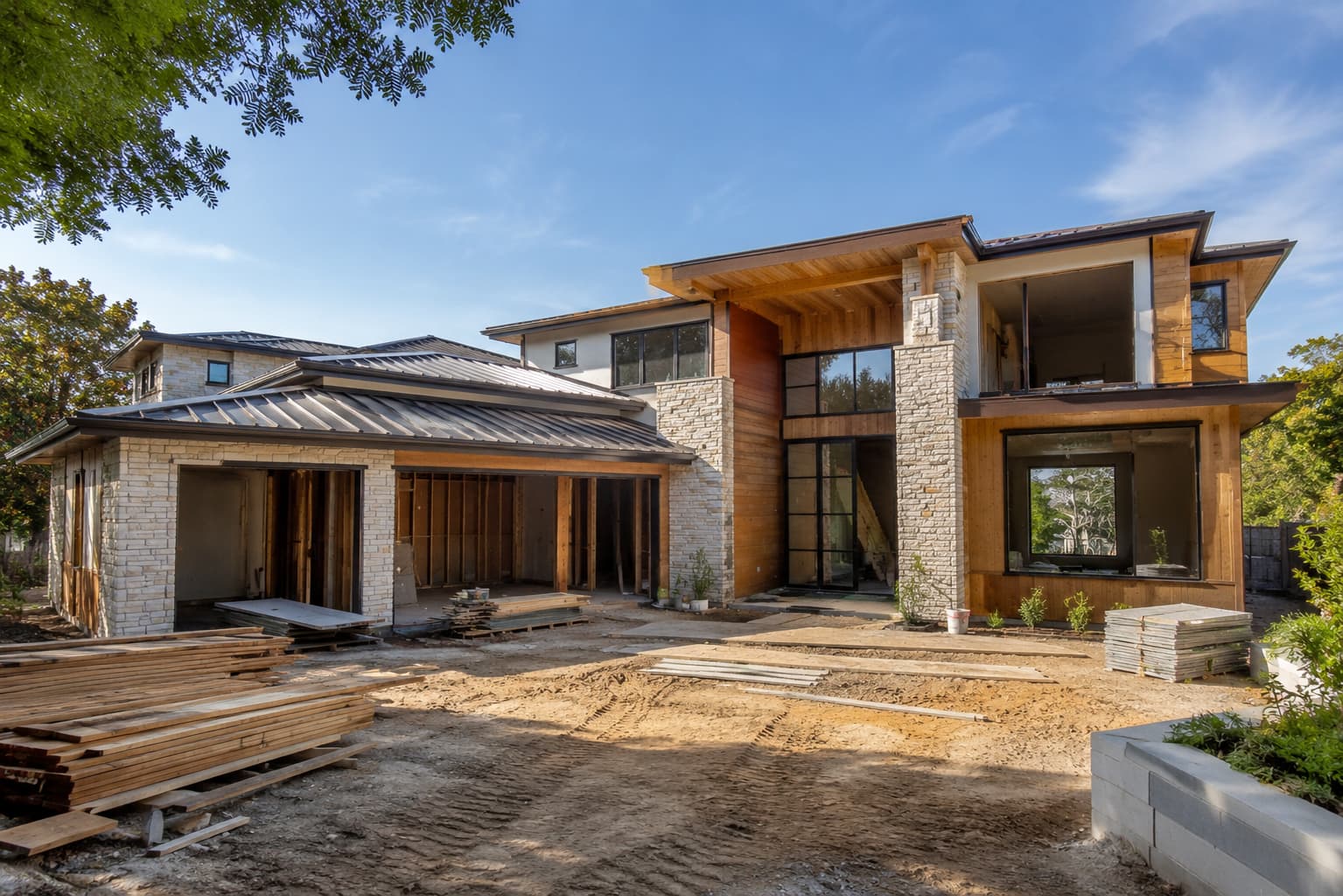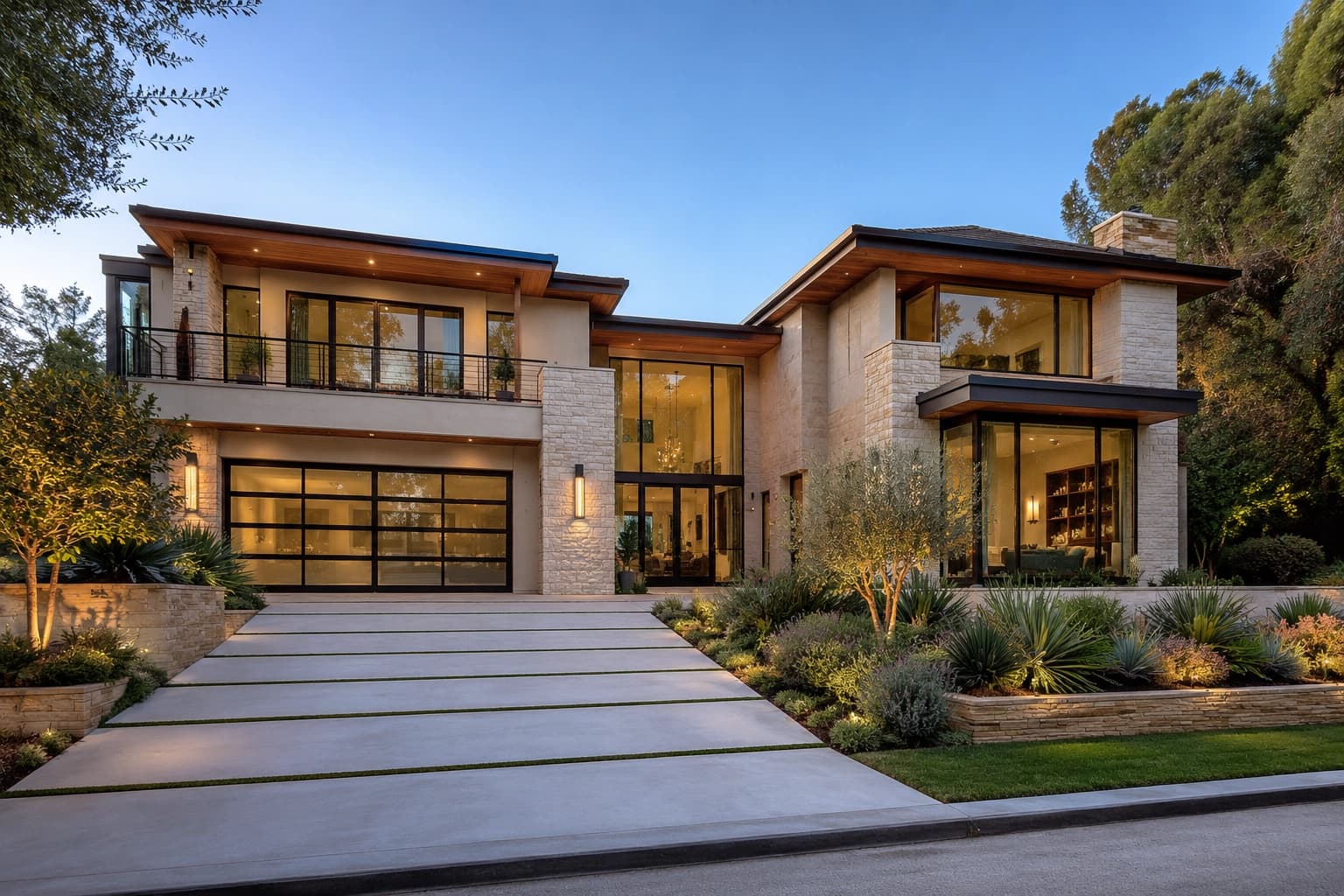
The custom home cost in Los Angeles can range from roughly $400 to $1,200+ per square foot, while luxury and complex hillside projects can exceed $1,500 per square foot. The actual price depends on the home's size, lot, design, materials, site conditions, and construction scope.
For example, a 3,000-square-foot custom home could represent a construction budget of approximately $1.2 million to $3.6 million or more before land costs and certain project-specific expenses. These figures are planning ranges because construction estimates can include different combinations of site work, labor, materials, professional services, and finishes.
That wide range makes early budgeting essential. Understanding what affects custom home construction costs can help you set realistic priorities, compare proposals, and avoid major financial surprises.
How Much Does It Cost to Build a Custom Home in Los Angeles?
For 2026 planning purposes, custom home construction in Los Angeles can range from approximately $400 to $1,200+ per square foot, depending on quality, location, design complexity, and site conditions. High-end and technically challenging projects can exceed these ranges.
Custom Home Type | Approximate Construction Cost |
|---|---|
Standard custom construction | $400–$650+ per sq. ft. |
Mid-to-high-end custom home | $650–$1,000+ per sq. ft. |
Luxury custom construction | $1,000–$1,500+ per sq. ft. |
Complex hillside or ultra-luxury construction | $1,500–$1,800+ per sq. ft. |
These figures are planning ranges rather than guaranteed contractor prices. Homeowners should also confirm whether an estimate includes site preparation, permits, design services, landscaping, appliances, and other project expenses.
For instance, a 2,500-square-foot home at $600 per square foot would represent approximately $1.5 million in construction costs. At $1,000 per square foot, the same size home would reach approximately $2.5 million.
The property can change the budget considerably. A flat lot with straightforward access may be much less complicated than a steep hillside property requiring extensive structural and site work.
Homeowners planning new home construction in Los Angeles should therefore establish the expected scope before relying on a per-square-foot figure.
What Determines Custom Home Cost in Los Angeles?
Several factors contribute to the final custom home construction cost in Los Angeles. Square footage matters, but it is only one part of the overall budget.
Home Size and Total Square Footage
Larger homes generally require more materials, labor, finishes, and mechanical systems. However, construction costs do not always increase proportionally with square footage.
A smaller home with highly customized finishes can have a higher cost per square foot than a larger home with simpler specifications.
For example, a home with a luxury kitchen, multiple bathrooms, custom cabinetry, large glass openings, and specialty architectural features may cost more per square foot than a larger home with standard finishes.
This is why custom home cost per square foot in Los Angeles should be treated as a planning benchmark rather than the only number used to evaluate a project.
Lot Location and Site Conditions
The lot itself can have a major effect on the construction budget.
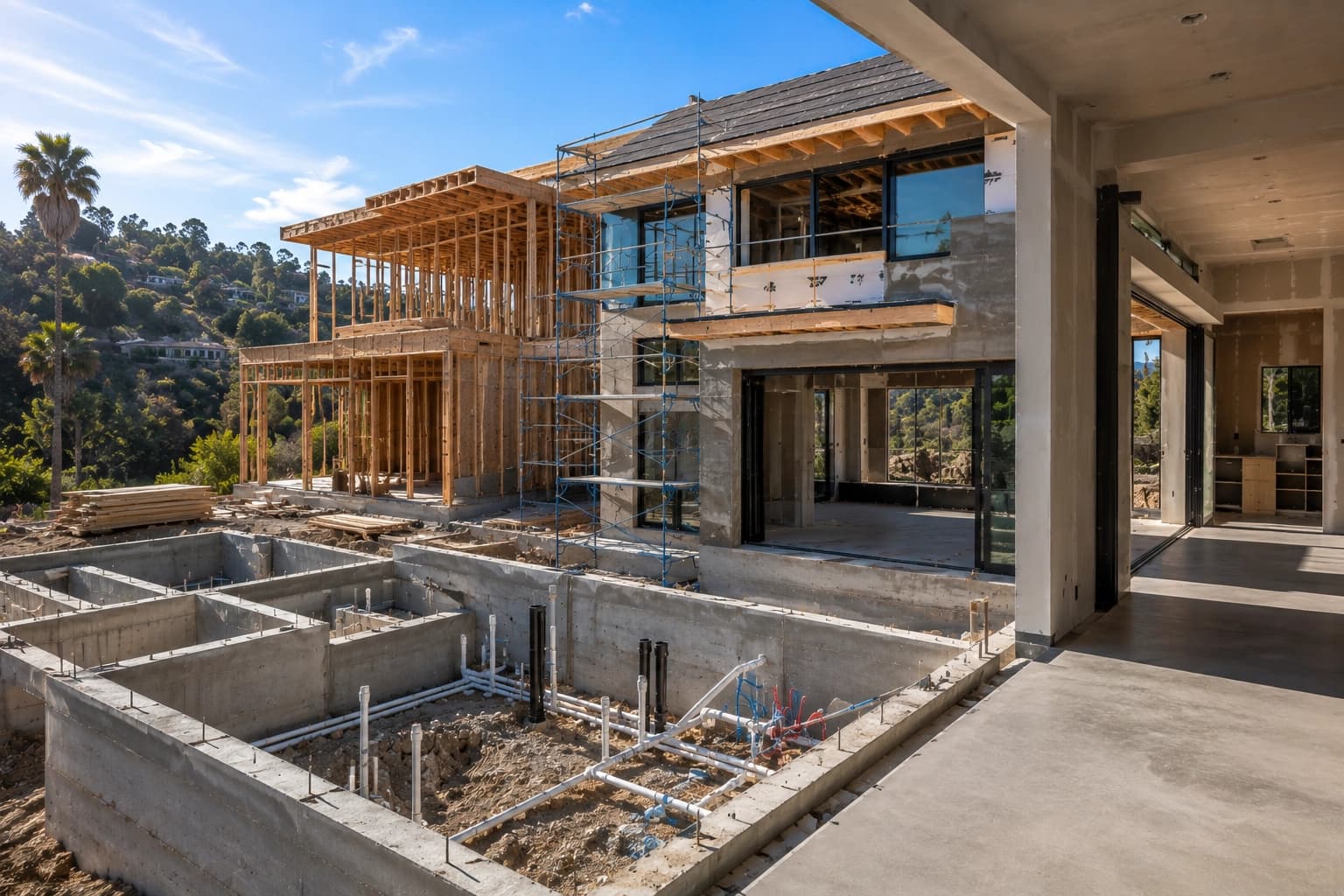
A relatively level property with easy access may require straightforward excavation and foundation work. A hillside lot can require additional grading, retaining structures, drainage, specialized foundations, engineering, and difficult material access.
Location can also affect permitting, utility connections, construction access, and delivery logistics.
A property evaluation should happen before the final budget is established. Working with an experienced custom home builder can help identify site and planning factors that may affect construction costs.
Architectural Design and Home Layout
Custom construction gives homeowners freedom to create a home around their lifestyle. However, architectural complexity can increase material, engineering, and labor requirements.
Multiple levels, unusual rooflines, high ceilings, expansive glass walls, curved walls, large structural spans, and specialty rooms can all affect construction costs.
A simpler layout does not necessarily mean sacrificing quality. It can allow more of the available budget to go toward premium finishes, outdoor spaces, appliances, or other priorities.
Construction Materials and Finishes
Material selections can significantly influence custom home building costs in Los Angeles.
Flooring, cabinetry, countertops, windows, doors, appliances, lighting, plumbing fixtures, roofing, and exterior materials all have different price levels.
The most effective approach is to identify your priorities before construction begins. Premium materials can then be concentrated in areas where they will have the greatest impact.
Permits, Fees, and Professional Services
A custom home budget must also include expenses beyond physical construction.
Depending on the project, these may include architectural services, engineering, surveying, soil reports, permits, inspections, utility connections, and other professional services.
Los Angeles permitting and planning fees can vary according to the project and jurisdiction. These expenses should be identified during early planning instead of being treated as unexpected costs later.
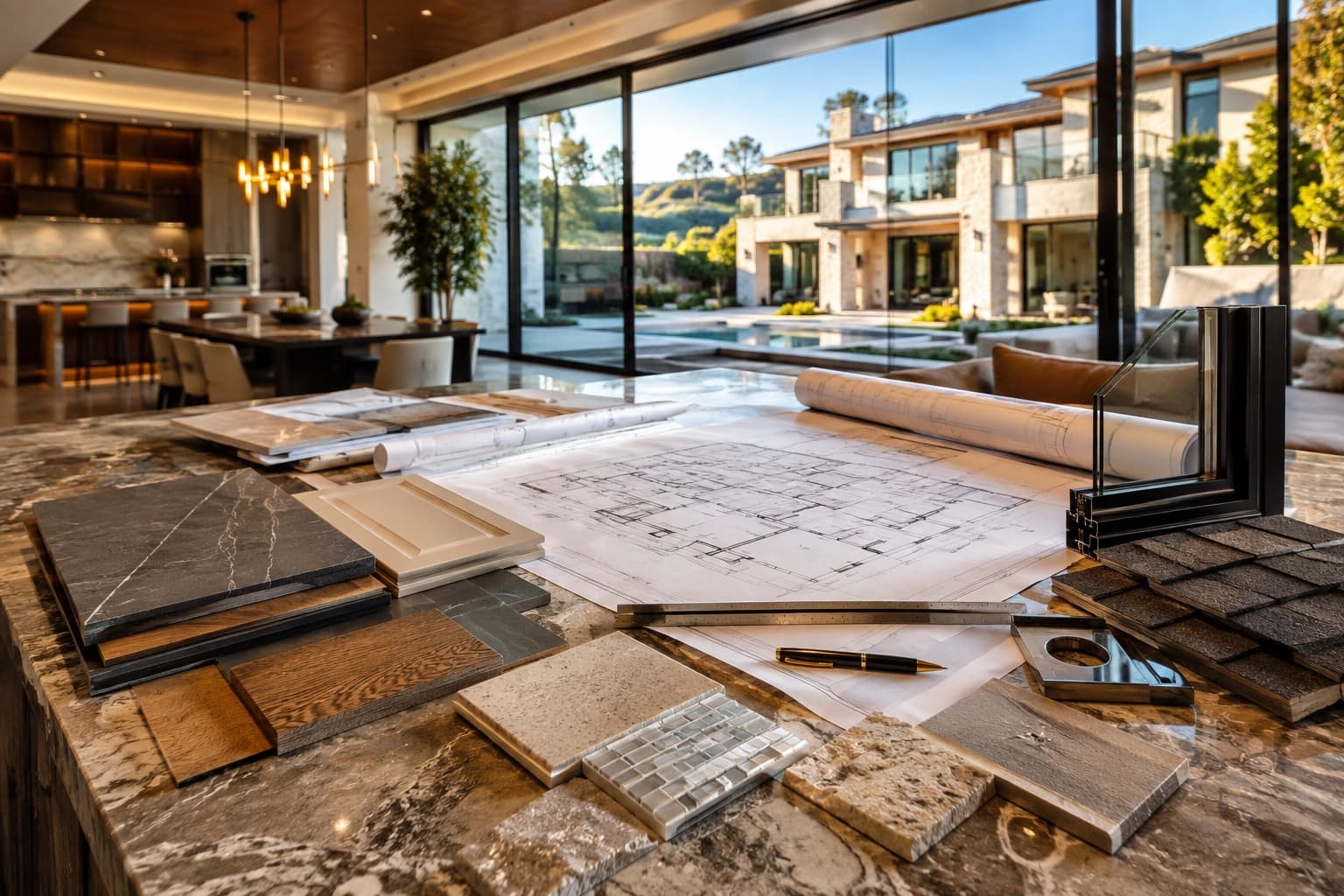
Custom Home Construction Cost by Project Stage
Breaking the project into stages makes it easier to understand where the construction budget goes.
Design and Pre-Construction
Before construction begins, the project may require architectural plans, engineering, surveys, site evaluation, budgeting, material selections, permitting, and contractor coordination.
These decisions can influence nearly every later stage of construction. A detailed pre-construction process can also identify conflicts between the design, budget, property, and permitting requirements.
Site Preparation and Foundation
Site preparation may include clearing, grading, excavation, utility work, drainage, and foundation construction.
Costs depend heavily on the property. Soil conditions, slopes, accessibility, existing structures, and drainage requirements can all influence the work required.
Hillside properties can require more complex engineering and structural solutions, making site evaluation especially important when calculating custom house construction costs.
Framing, Roofing, and Exterior Construction
Framing establishes the home's primary structure, while roofing, windows, doors, exterior walls, and other components form the building envelope.
The home's architectural design and material choices influence this stage. Large windows, custom rooflines, specialty doors, and premium exterior finishes can increase both material and labor costs.
Plumbing, Electrical, and HVAC
Plumbing, electrical, and HVAC systems must be designed around the home's layout and expected use.
Larger homes may require additional circuits, lighting, plumbing fixtures, HVAC zones, and equipment. Smart-home systems and specialized electrical requirements can also increase the budget.
Interior Finishes and Final Construction
Interior construction includes drywall, flooring, cabinetry, countertops, tile, paint, lighting, doors, trim, fixtures, and other finishing work.
This stage provides significant opportunities to manage the budget. Establishing material priorities before ordering begins can help prevent unnecessary upgrades and costly substitutions.
A detailed approach to financial planning for a custom house can help homeowners organize these expenses before construction begins.
How to Budget for a Custom Home in Los Angeles
A realistic budget should account for the complete project rather than focusing only on the advertised construction price per square foot.
Set Priorities Before Design Begins
Start by identifying which features matter most to you.
You may prioritize a large kitchen, luxury primary suite, outdoor living area, premium windows, energy-efficient systems, or a particular architectural style.
Clear priorities give your architect and contractor a framework for balancing design goals with your available budget.
Plan for Unexpected Construction Costs
Even detailed plans cannot eliminate every unexpected condition.
Construction may uncover issues involving soil, utilities, drainage, structural requirements, material availability, or permitting.
For that reason, homeowners should avoid allocating their entire available budget to the initial construction estimate. A contingency allowance provides financial flexibility when unexpected expenses arise.
You should also understand how changes are priced before construction starts. Clear procedures for approving changes can help prevent confusion later.
Choose a Contractor With Transparent Pricing
The contractor you choose can significantly influence how clearly your construction budget is managed.
Look for a contractor who explains inclusions, exclusions, allowances, material assumptions, and potential additional costs before work begins.
A transparent pricing process can make it easier to understand exactly where your money is going and how design decisions affect the final construction cost.
How Long Does It Take to Build a Custom Home in Los Angeles?
A custom home can take substantially longer than a standard renovation because the process includes design, engineering, permitting, site preparation, construction, inspections, and final completion.
The overall timeline depends on:
- Home size and complexity
- Lot and soil conditions
- Architectural design
- Permit requirements
- Material availability
- Construction scope
- Site access
- Client selections and changes
A complex hillside home can require additional engineering and site work compared with a straightforward flat-lot project.
The most reliable timeline comes from a project-specific schedule developed during pre-construction. Rather than relying on a generic estimate, homeowners should establish expected milestones with their contractor.
Conclusion
The custom home cost in Los Angeles can range from hundreds to more than $1,000 per square foot, with luxury and complex hillside projects reaching significantly higher levels. A 3,000-square-foot home could therefore represent a construction investment of roughly $1.2 million to $3.6 million or more, depending on the property's conditions and project specifications.
The biggest cost drivers include square footage, lot conditions, architectural complexity, materials, professional services, permits, mechanical systems, and labor.
The best way to control your budget is to establish priorities early, evaluate the property carefully, and obtain a detailed proposal that clearly explains what is included.
If you are deciding whether to build or renovate, the overall financial picture can be very different. Comparing buying a new home with remodeling in Los Angeles can help you determine which approach better fits your goals, property, and budget.