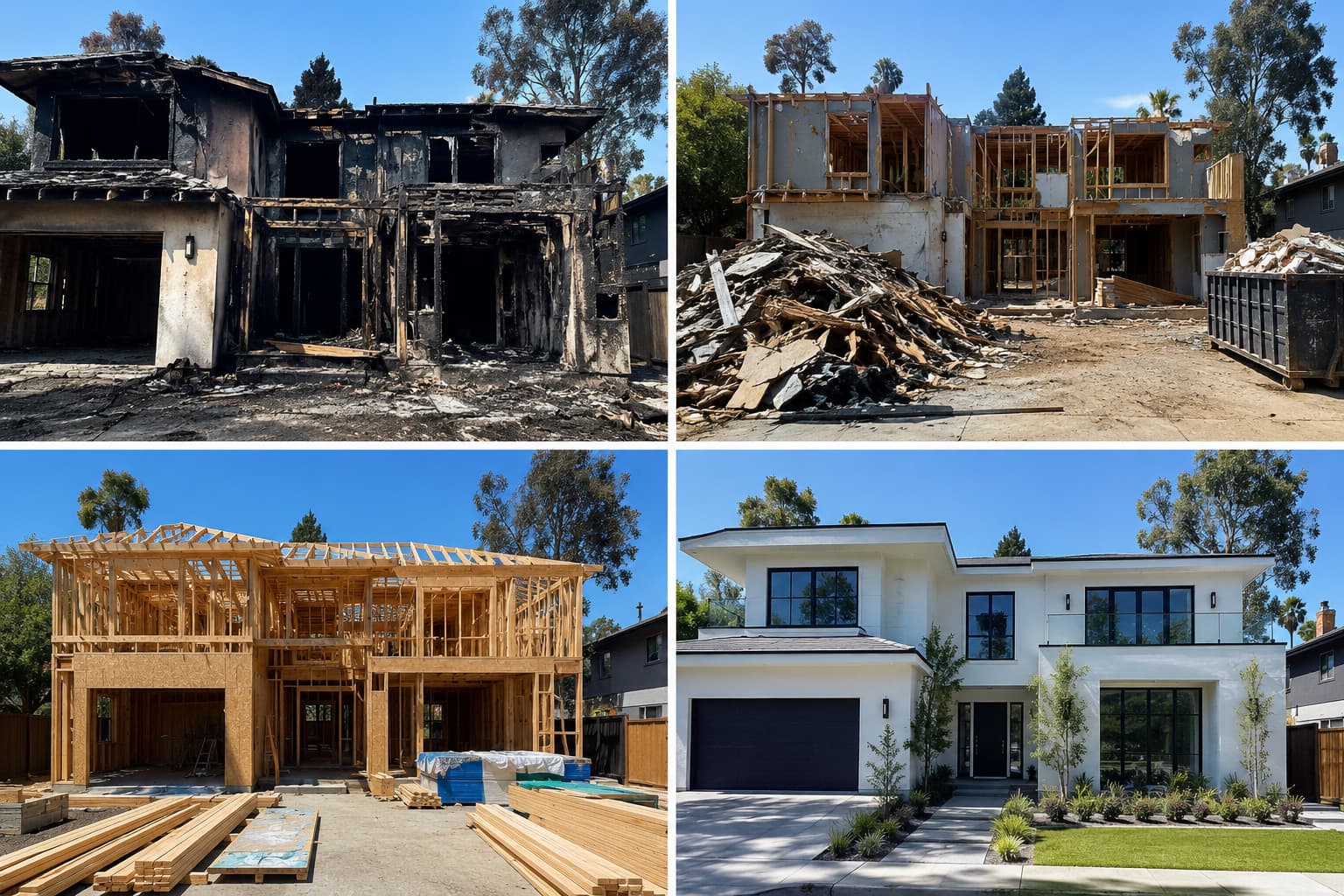
What Happened in the Pacific Palisades Fire
The Pacific Palisades Fire began on January 7, 2025, at approximately 9:30 a.m., in an area under the jurisdiction of the Los Angeles City Fire Department. Cal Fire's final incident update, released February 10, 2025, attributes the cause to arson. The fire burned 23,448 acres, was 100 percent contained on January 31, 2025, after 24 active days, and became the third-most destructive wildfire in California history, behind only the 2018 Camp Fire and the 2025 Eaton Fire, according to Cal Fire's Top 20 Most Destructive California Wildfires list (updated October 9, 2025).
The damage was concentrated in Pacific Palisades, Topanga, and the eastern edge of Malibu. Cal Fire's final accounting reports 6,833 structures destroyed and 973 structures damaged, with 12 civilian fatalities. These numbers make the Palisades Fire one of the defining disasters in Los Angeles history and place rebuilding at the center of the city's recovery agenda for 2026.
Where the Pacific Palisades Rebuild Stands Today
As of July 7, 2026, LADBS data reported by FOX LA shows that rebuilding permits have been issued for 1,419 properties in Pacific Palisades, yet only 28 addresses have received certificates of occupancy. That gap — thousands of permits in motion, but a small fraction of homes finished — is the most honest single snapshot of where the rebuild stands 18 months after the fire.
The State of California's rebuilding dashboard, retrieved July 16, 2026, reports 5,724 applications received and 3,587 permits issued for the City of Los Angeles fire-recovery program, with an average of 66 days from application to permit and 17 days in agency review. Palisades-specific data from xtown.la (January 5, 2026) shows 3,090 building and electrical permits approved, including 563 ground-up new building permits.
Key milestones confirm the recovery has moved quickly on the government side. Debris removal began 35 days after the fires ignited, Phase 1 hazardous-waste clearing by the EPA finished in 28 days, and the U.S. Army Corps of Engineers completed Phase 2 structural debris removal in September 2025 — nearly a year ahead of original expectations. Water and power were safely restored for standing homes within two months. The first Palisades rebuilding permits were issued 57 days after the fire began, and the first certificate of occupancy was issued November 21, 2025, at 915 N. Kagawa Street — a ground-up rebuild completed in approximately six months of construction, according to the Mayor's Office.
In other words, the bottleneck is no longer debris, utilities, or city review capacity. The bottleneck is the design and permitting work that happens on the homeowner's side before an application is filed. Goldenline's Pacific Palisades fire rebuild services are designed to remove that bottleneck.
The LADBS Permit Pathway for Pacific Palisades Rebuilds
Pacific Palisades rebuilds are processed by the Los Angeles Department of Building and Safety (LADBS) under a special post-fire framework created through a series of mayoral executive orders and state actions. The pathway below is specific to City of Los Angeles properties in the Palisades burn area as of July 2026.
Step 1: Start at a Rebuilding Center
Homeowners have two physical locations. The One-Stop Rebuilding Center at 1828 Sawtelle Boulevard, West Los Angeles, CA 90025, is open Monday through Friday, 9 a.m. to 5 p.m., and has served more than 5,600 people as of November 2025. Staff from LADBS, the Bureau of Engineering, LAFD, City Planning, and LADWP are co-located there. The Palisades Inspections and Permitting Support Center at 16925 Marquez Avenue provides localized inspection and permitting support.
Original building plans are obtainable at the One-Stop Center because Governor Newsom's EO N-4-25 suspended the state law requiring the original designer's consent before releasing plans to the owner.
Step 2: Confirm Like-for-Like +10% Eligibility
The City of Los Angeles like-for-like +10% rule, described in the City's recovery FAQ as of July 2026, allows eligible projects to rebuild "in substantially the same location as and not exceed 110% of their previous footprint and height" — meaning up to 110% of the prior footprint and 110% of the prior height. Eligible projects are waived from CEQA, Specific Plan, and Coastal Act requirements, even if the original structure did not comply with current zoning. Governor Newsom's EO N-4-25, signed January 12, 2025, and reaffirmed January 6, 2026, provides the state-level suspension for projects within the same limits.
Step 3: Run a Free Archistar eCheck Pre-Check
Before submitting a formal application, Palisades rebuild applicants can use Archistar eCheck, a free AI-assisted permit pre-check tool available to homeowners and design professionals. The tool flags code and compliance issues early, reducing the chance of a formal plan-check rejection and shortening the overall timeline.
Step 4: Submit Through Self-Certification or Standard Plan Check
LADBS offers two tracks. The Self-Certification Pilot (EO6), launched June 2025 and expanded to civil engineers in February 2026, lets California-licensed architects and civil engineers verify code compliance without a full LADBS plan check. Other City approvals still apply. This is the fastest track for qualified projects.
For projects not using self-certification, LADBS aims to complete initial reviews within 30 days under EO1. The Mayor's Office reported in February 2026 that more than 70% of single-family permit clearances are no longer required. If review exceeds 30 business days, AB 253 allows applicants to hire a private plan-check provider for residential projects of 1 to 10 units.
Step 5: Pay No Permit or Plan-Check Fees
Under Emergency Executive Order 7 (EO7), issued April 25, 2025, City departments suspended collection of permit and plan-check fees for Palisades fire rebuilds. The City Administrative Officer initially estimated $86 million in waived fees, later revised to $278 million. FOX LA reported in 2026 that the City Council approved a plan to waive rebuilding permit fees for eligible Palisades survivors.
Step 6: Build, Inspect, and Obtain the Certificate of Occupancy
After permit issuance, construction inspections proceed through LADBS. The Palisades Inspections and Permitting Support Center at 16925 Marquez Avenue supports local inspection scheduling. As of July 7, 2026, 28 addresses in Pacific Palisades had received certificates of occupancy.
Building Codes and Wildfire Hardening Requirements
Every rebuilt home in Pacific Palisades must comply with current building codes, including the wildfire-specific provisions that replaced the former Chapter 7A.
CWUIC Replaced Chapter 7A on January 1, 2026
As of January 1, 2026, the California Wildland-Urban Interface Code (CWUIC, Title 24 Part 7) replaced CBC Chapter 7A. The City of Los Angeles has adopted CWUIC by reference for Very High and High Fire Hazard Severity Zones. CWUIC Chapter 5 requires:
- Class A fire-rated roof assembly per ASTM E108 or UL 790 (§504.2).
- Ember- and flame-resistant vents, State Fire Marshal-listed or tested to ASTM E2886, with mesh openings between 1/16 inch and 1/8 inch, noncombustible and corrosion-resistant (§504.10).
- Exterior walls of noncombustible material, ignition-resistant labeled material, or fire-retardant-treated wood for exterior use (§504.5.2).
- Decking that meets ASTM E2632 / E2726 or is ignition-resistant / noncombustible (§504.7.3.2).
- Multilayered glazed panels with tempered glass, glass block, or 20-minute fire-rated glazing (§504.8).
- Enclosed eaves with noncombustible or ignition-resistant material or 2-inch nominal lumber (§504.3).
- Noncombustible gutters with debris prevention (§504.4).
The state suspended 2026 code changes for fire rebuilds, so homeowners with 2019 Building Code approved plans may use them. However, WUI exterior requirements still apply locally.
Zone 0 Is Pending, Not Current Law
AB 3074 (2020) created an ember-resistant Zone 0 extending five feet from structures, but it is not yet enforceable as of July 16, 2026. Governor Newsom's EO N-18-25 directed the Board of Forestry to complete rulemaking by December 31, 2025, but that deadline passed. The Board released an updated draft in April 2026. Zone 0 must be described as "pending final adoption by the Board of Forestry (draft as of April 2026)" and not as current law.
Defensible Space
California Public Resources Code §4291 requires 100 feet of defensible space, divided into Zone 1 (0–30 feet, "lean, clean and green") and Zone 2 (30–100 feet, fuel reduction), plus the pending Zone 0. CAL FIRE issued updated Fire Hazard Severity Zone maps for Los Angeles County on March 24, 2025; local agencies may increase but not decrease the recommended severity level, and LAFD projects an increase in affected parcels.
Insurance Realities for Palisades Homeowners in 2026
Insurance is the financial engine of any rebuild, and the Palisades Fire landed in the middle of a California insurance market already under stress.
The FAIR Plan
The California FAIR Plan held 684,388 policies with $750 billion in total exposure as of March 2026 — increases of 152% and 242% since September 2022. Following the January 2025 fires, Insurance Commissioner Lara approved a $1 billion member assessment on February 11, 2025, the first in more than 30 years, to cover approximately 3,621 Palisades claims and 1,369 Eaton claims.
FAIR Plan policies provide basic fire coverage but typically exclude liability, theft, and water damage. Many FAIR Plan holders supplement coverage with a "difference in conditions" policy from a traditional carrier. Review your full coverage stack with your agent before committing to a rebuild scope.
Safer from Wildfires and IBHS Certification
The California Department of Insurance's "Safer from Wildfires" framework lists 10 mitigation actions across structure, immediate surroundings, and community layers; every action qualifies for an insurance discount. Larger discounts took effect July 1, 2026, under the Sustainable Insurance Strategy. AB 1, effective January 1, 2026, requires regular updates to discount regulations.
The Insurance Institute for Business & Home Safety (IBHS) offers Wildfire Prepared Home certification, renamed in June 2026 to Essential (formerly Base) and Enhanced (formerly Plus) tiers. The application fee is $125, valid for three years. All required actions must be complete — partial mitigation does not qualify, and discounts are not guaranteed and vary by insurer.
The Non-Renewal Moratorium Has Expired
The SB 824 one-year mandatory non-renewal moratorium for properties affected by the Palisades and Eaton fires ran from January 7, 2025, through January 7, 2026, and has expired. As of January 2026, Palisades homeowners are no longer protected from non-renewal by their insurers. Rebuilding to CWUIC standards and documenting Safer from Wildfires compliance is therefore a coverage-retention strategy, not just a safety measure.
What Rebuilding Costs in Pacific Palisades
No honest source publishes a reliable per-square-foot rebuild cost for Pacific Palisades. Every circulating range is marketing content disconnected from your specific lot, slope, soil, structural engineering needs, and finish selections. Use permit-value data and project-specific estimates instead.
Public permit records provide reference points. Shovels.ai data from March 17, 2026, shows Pacific Palisades issued 6,448 permits in 14 months, a 340% year-over-year increase. Xtown.la reported 3,090 building and electrical permits approved in Pacific Palisades, including 563 ground-up new building permits. Across both fire zones, 6,932 new residential construction permits were issued in the year after the fires versus 194 in 2024 — a 35-fold increase.
For value context, Shovels.ai reports Altadena's average permit job value at $275,000 in the 13 months after the fires (up from $67,000 pre-fire), and Malibu's average at $489,000 per permit. These are permit valuations, not total project costs, and individual projects vary widely.
Your specific cost depends on lot conditions, demolition and debris removal (if not completed by USACE), structural and geotechnical engineering, the CWUIC hardening package, utility connections and any undergrounding work, interior finishes, and labor availability. Because EO7 suspended permit and plan-check fees, City permit costs are currently not an added expense for qualifying rebuilds.
Property Tax Considerations
If you rebuild "in a comparable manner" to your destroyed home, you preserve your Proposition 13 base-year assessed value. Additions beyond comparable — such as an extra bathroom, footage beyond the like-for-like allowance, or an accessory dwelling unit — are assessed at full market value, according to the California Board of Equalization. Under Proposition 50, if damage exceeds 50% of the full cash value, replacement is capped at 120% of the destroyed property's value before any excess is reassessed, within a five-year window. A disciplined design-build scope has permanent property-tax value.
Realistic Pacific Palisades Rebuild Timelines
Timeline expectations should be grounded in data, not optimism.
The fastest Palisades milestones show what is possible when the permit package is complete and the team is coordinated. The first rebuilding permits were issued 57 days after the fire began, and the first certificate of occupancy was issued November 21, 2025, for a ground-up rebuild completed in approximately six months. The State dashboard reports an average of 66 calendar days from application to permit for City of Los Angeles fire-recovery applications, with 17 days in agency review, as of July 2026.
But the broader LA County data reveals the real risk. In Altadena — the closest comparable jurisdiction with detailed turnaround data — the median time to obtain a building permit reached 155 days as of March 2026, and the figure was rising. Only 32 of those 155 days were spent in county review; approximately 122 days reflected delays waiting for applicant responses and incomplete submissions, according to Los Angeles Times reporting from April 2026.
That 122-day applicant-delay figure is the central argument for design-build. When one team owns architecture, engineering, and construction, the permit package is complete on first submission, code interpretations are resolved before filing, and responses to plan-check comments arrive in hours rather than weeks. The bottleneck shifts from the homeowner's design process to actual construction.
Construction itself typically takes 6 to 18 months depending on home size, site complexity, and customization level. A straightforward like-for-like +10% rebuild on a cleared, stable lot will fall toward the shorter end. A complex coastal-zone rebuild with custom architecture and high-end finishes will fall toward the longer end.
Why Design-Build Accelerates Palisades Rebuilds
In a traditional design-bid-build model, you hire an architect, wait for plans, put the plans out to bid, select a contractor, and then discover that the design exceeds your insurance proceeds or takes longer to build than your Additional Living Expenses coverage allows. Each handoff introduces delay, miscommunication, and cost escalation.
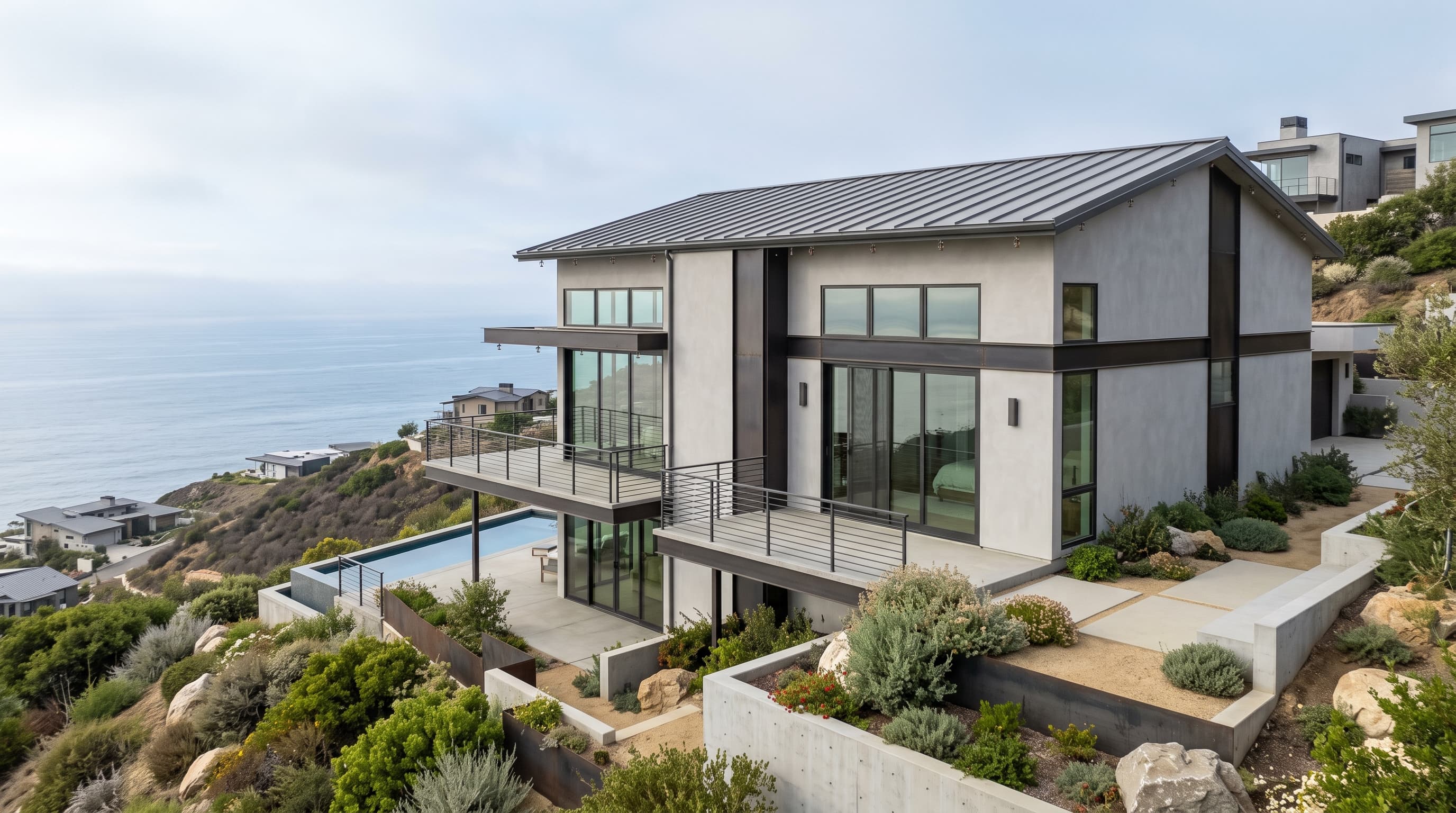
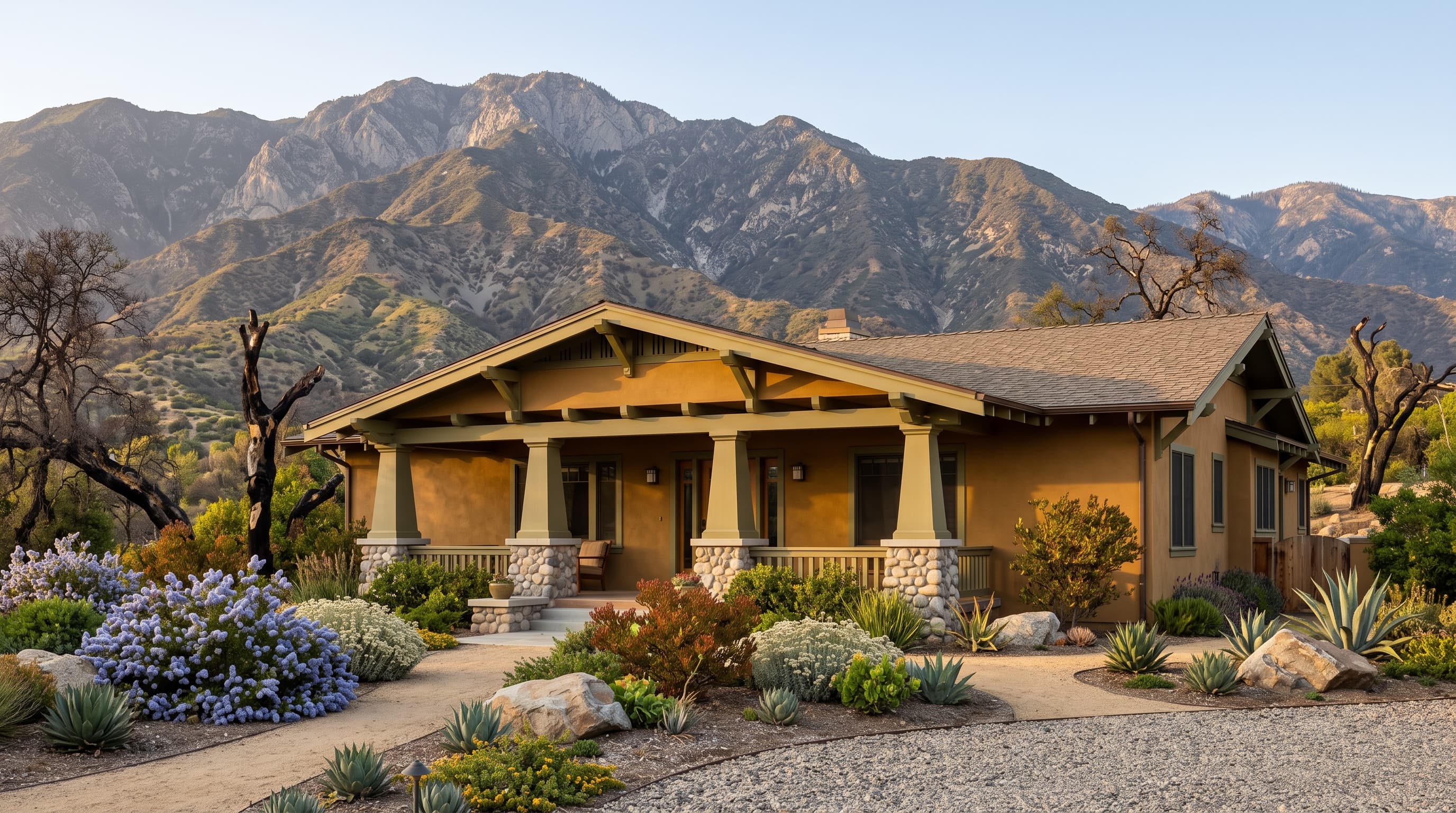
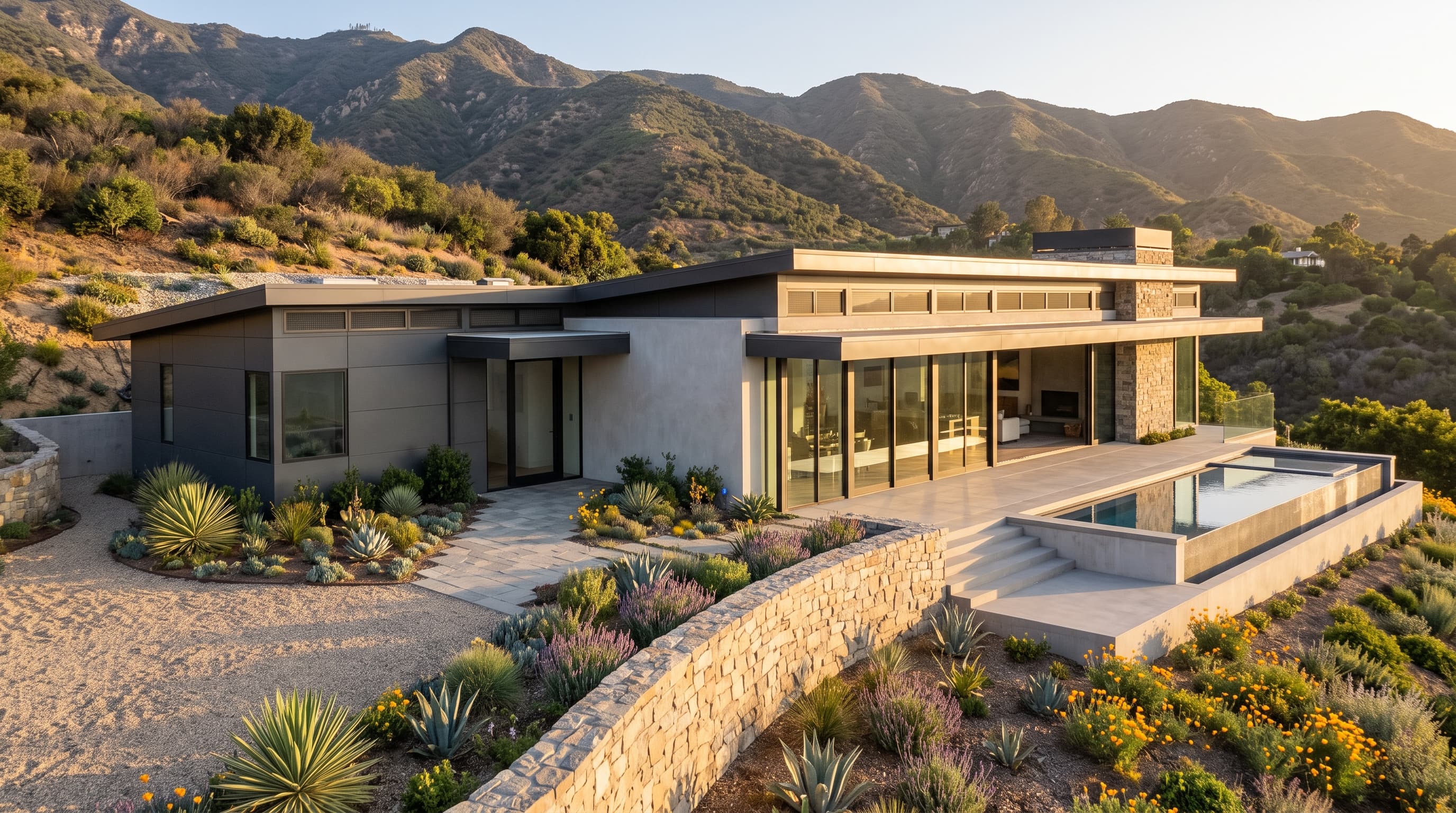
Design-build eliminates the handoffs. One firm holds the design, budget, permit strategy, and construction schedule from the first meeting. Your architect, engineer, and builder sit in the same room. Code compliance — including CWUIC Chapter 5 hardening, defensible space planning, and LADBS like-for-like rules — is baked into the drawings from the start, not caught in a plan-check comment six weeks later.
Design-build is also the natural fit for LADBS EO6 self-certification. When your licensed architect is part of the same firm that will build the home, the incentive to get the plans right — not merely approved — is built in. No finger-pointing. No change-order surprises sourced to "the architect's design." Just one team accountable for delivering your home. Goldenline's fire rebuild service exists for one reason: to bring homes back to life after the fire.
Start Your Pacific Palisades Fire Rebuild
Rebuilding after the Palisades Fire is not a construction project with an emotional component — it is an emotional journey with a construction component. The right contractor understands this distinction. At Goldenline Construction, we guide Los Angeles homeowners through fire rebuilds with a process built around the reality that you are recovering from a traumatic loss while making hundreds of design, budget, and schedule decisions.
We start every Palisades fire rebuild with a free, no-obligation consultation at your property. We walk the site with you, review your insurance coverage, confirm whether your project qualifies for like-for-like +10%, outline the LADBS pathway that applies, and provide a realistic timeline and budget range based on your specific lot, scope, and finish expectations — not a generic square-footage multiplier.
Call Goldenline Construction at 818-724-8494, visit our headquarters at 6449 Independence Avenue, Woodland Hills, CA 91367, or contact us through our website. CSLB License #989378. The debris is cleared, the centers are open, the fees are suspended, and the permit pathways are established. Your rebuild starts with one conversation.