A new driveway does more than just boost your home's curb appeal. It protects your property value and sets the tone for your entire exterior. But when you live in Los Angeles, picking the right material is not just about looks. You have to consider earthquakes, heavy clay soils, and the blazing sun.
If you are debating between a concrete and a paver driveway, making the wrong choice can cost you thousands of dollars in repairs down the road. Let's break down everything you need to know about concrete vs paver driveways in 2026.
Why Los Angeles Driveways Face Unique Challenges
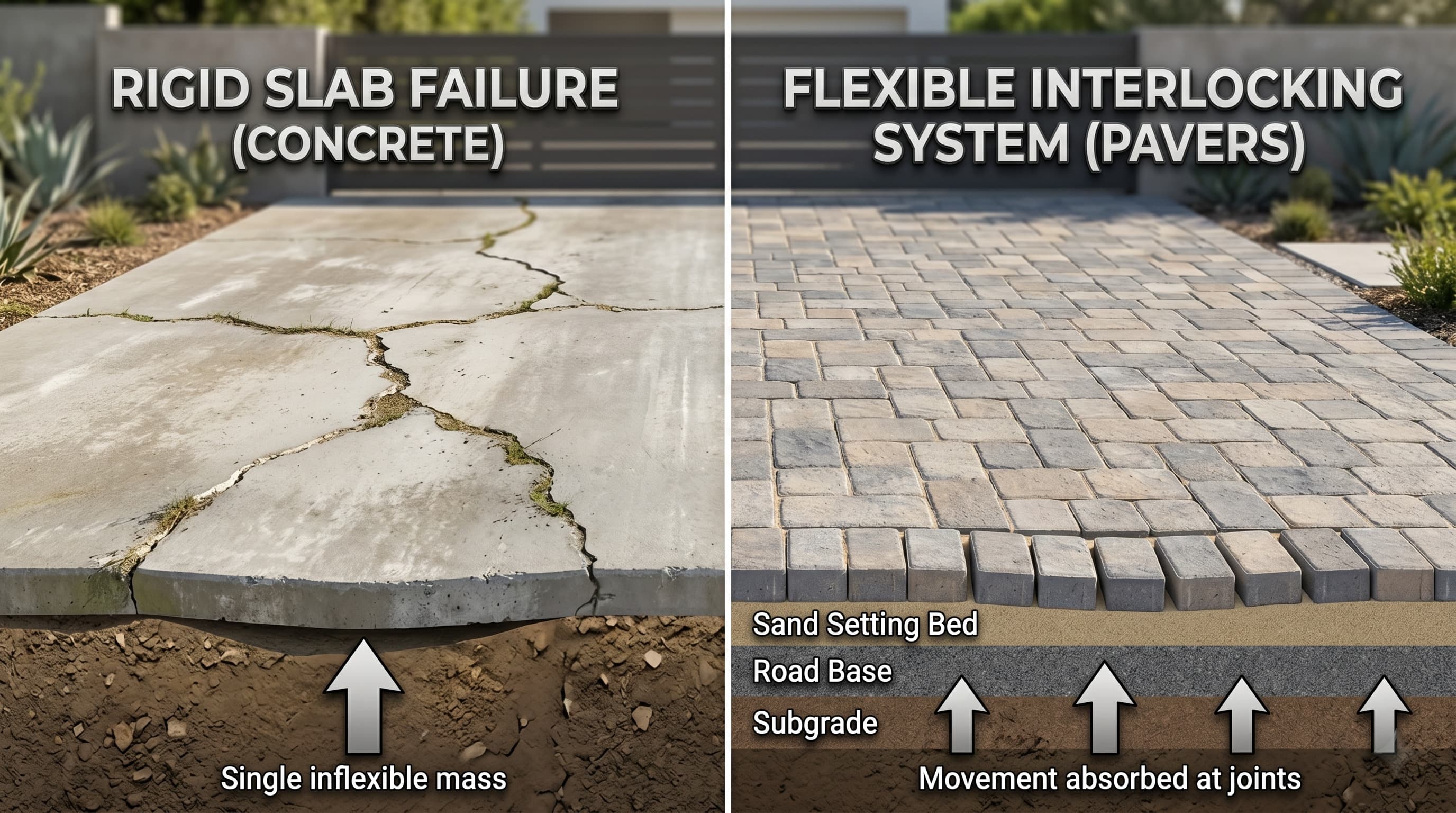
Los Angeles is a beautiful place to live, but it is incredibly tough on hardscaping. Our region deals with three unique environmental factors that destroy standard driveways. First, we have expansive clay soils. These heavy soils act like a giant sponge. They absorb water and swell during winter rains, and then shrink rapidly during dry summer spells. This constant, seasonal movement places massive pressure on rigid surfaces, often causing severe driveway heave.
Second, minor seismic activity is a daily reality. Even tiny, unnoticeable tremors send shockwaves through the ground. Rigid materials simply cannot absorb this stress without snapping. Finally, the intense Southern California sun bakes outdoor surfaces year-round. This heat causes materials to naturally expand and fades decorative colors rapidly.
Poured Concrete Driveways: Pros, Cons, and Costs
Concrete is the traditional choice for many homes across the country. It provides a clean, modern aesthetic and goes down relatively quickly. However, due to our local environment, it is not always the best long-term investment for a Southern California property.
Standard vs Stamped Concrete
Standard, broom-finish concrete is simple and very budget-friendly. On average, a plain poured concrete driveway costs between $8 and $15 per square foot to install. If you want a more premium, customized look, you might consider stamped concrete. This option mimics the look of stone or brick using textured mats and colored dyes.
While stamped concrete looks great on day one, it typically costs $18 to $30 per square foot. Unfortunately, the intense LA sun quickly fades those beautiful stamped colors, leaving the surface looking tired.
The Hidden Costs of Concrete Cracking
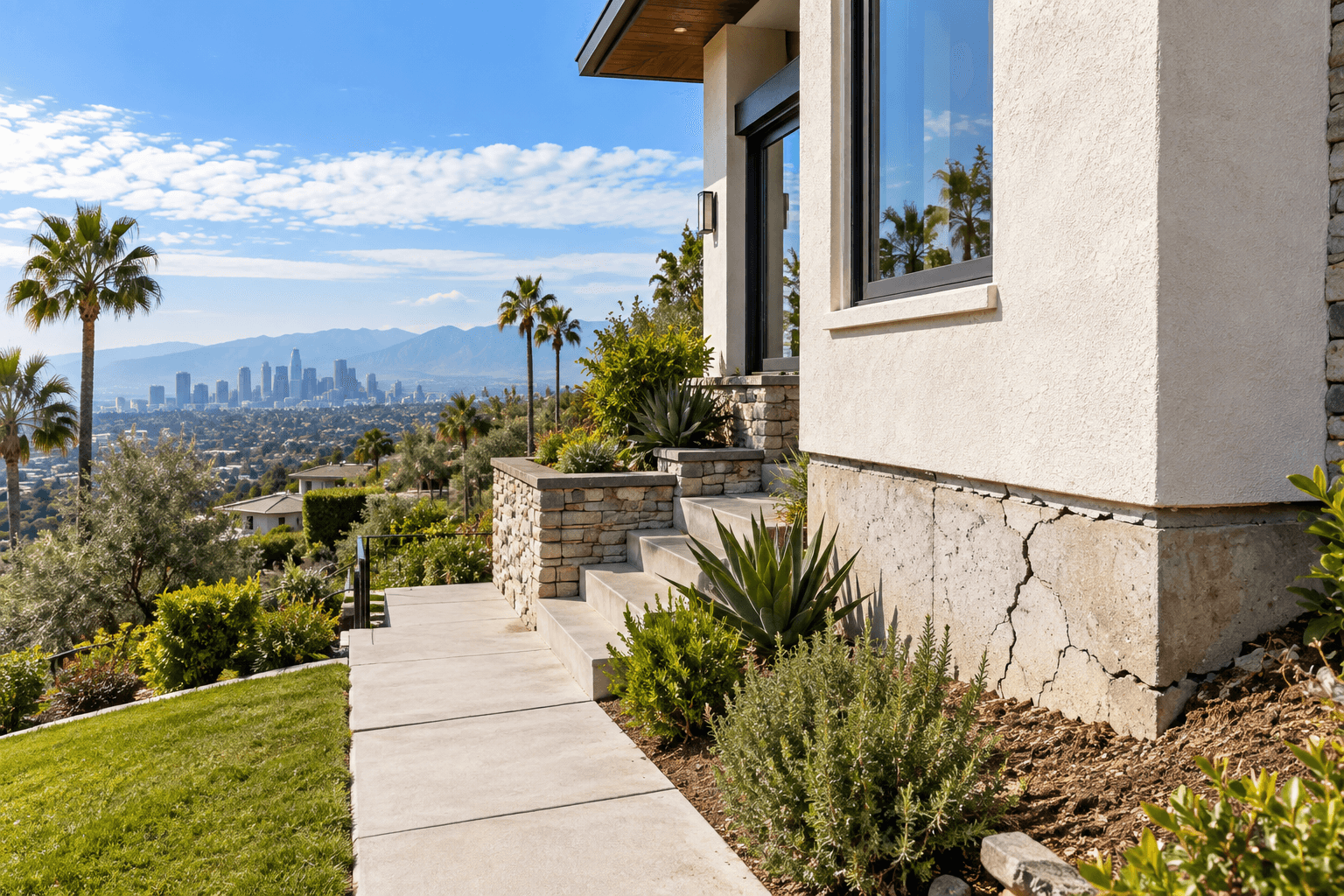
Concrete's biggest flaw is its extreme rigidity. Because it is poured as one giant, solid slab, it cannot flex when the ground inevitably moves. When our clay soils expand or minor earthquakes hit, the slab simply cracks under the pressure.
While concrete is cheaper upfront, these inevitable cracks introduce massive hidden costs. Patching these fractures is expensive, and the new concrete never perfectly matches the old, weathered surface.
Furthermore, if a major utility line breaks under your slab, plumbers are forced to jackhammer a permanent scar through your driveway to fix it. Over a 20-year span, constant patching and a likely full replacement can push your total concrete costs to an astonishing $25,000 to $35,000.
Interlocking Paver Driveways: Pros, Cons, and Costs
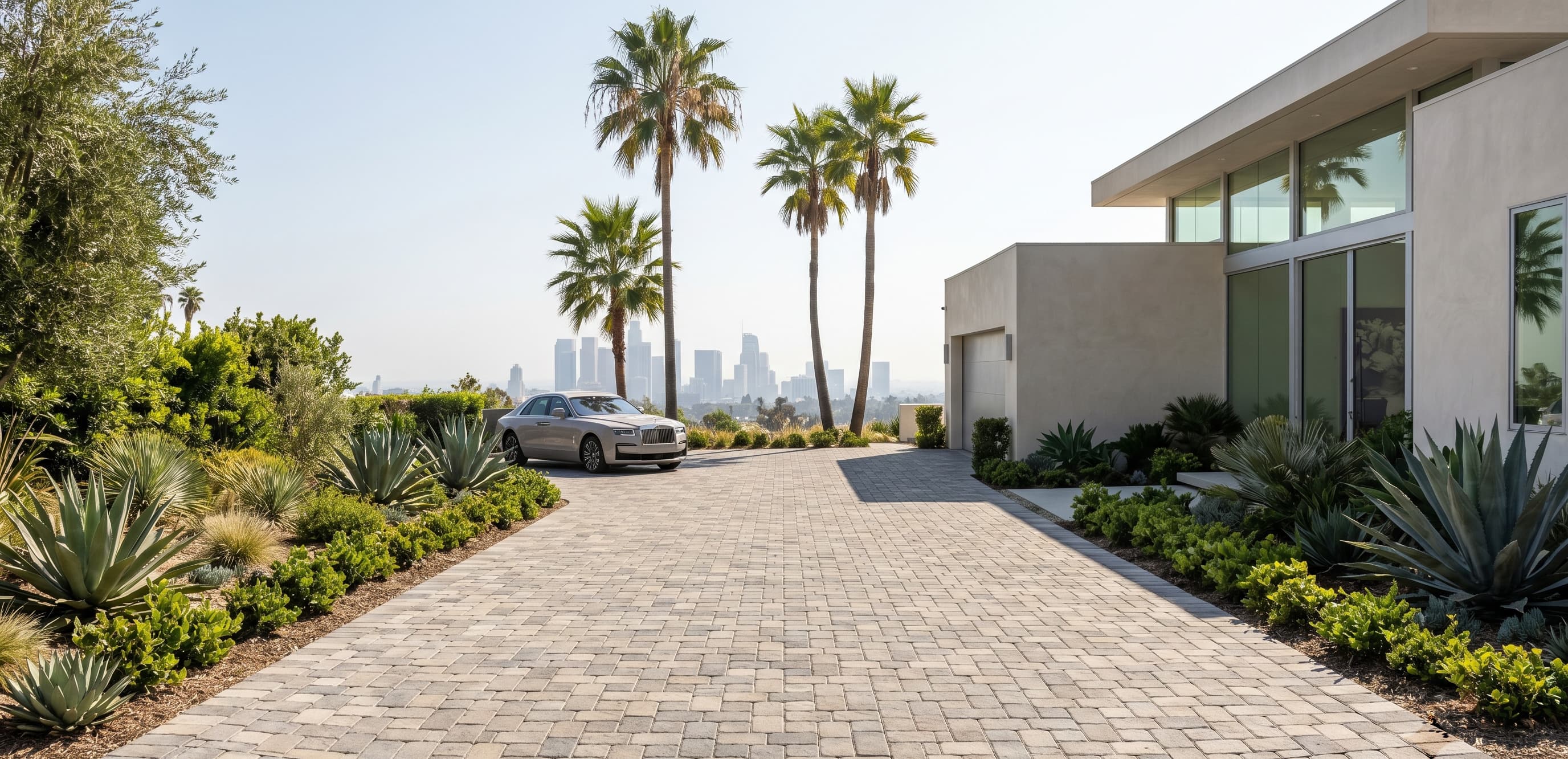
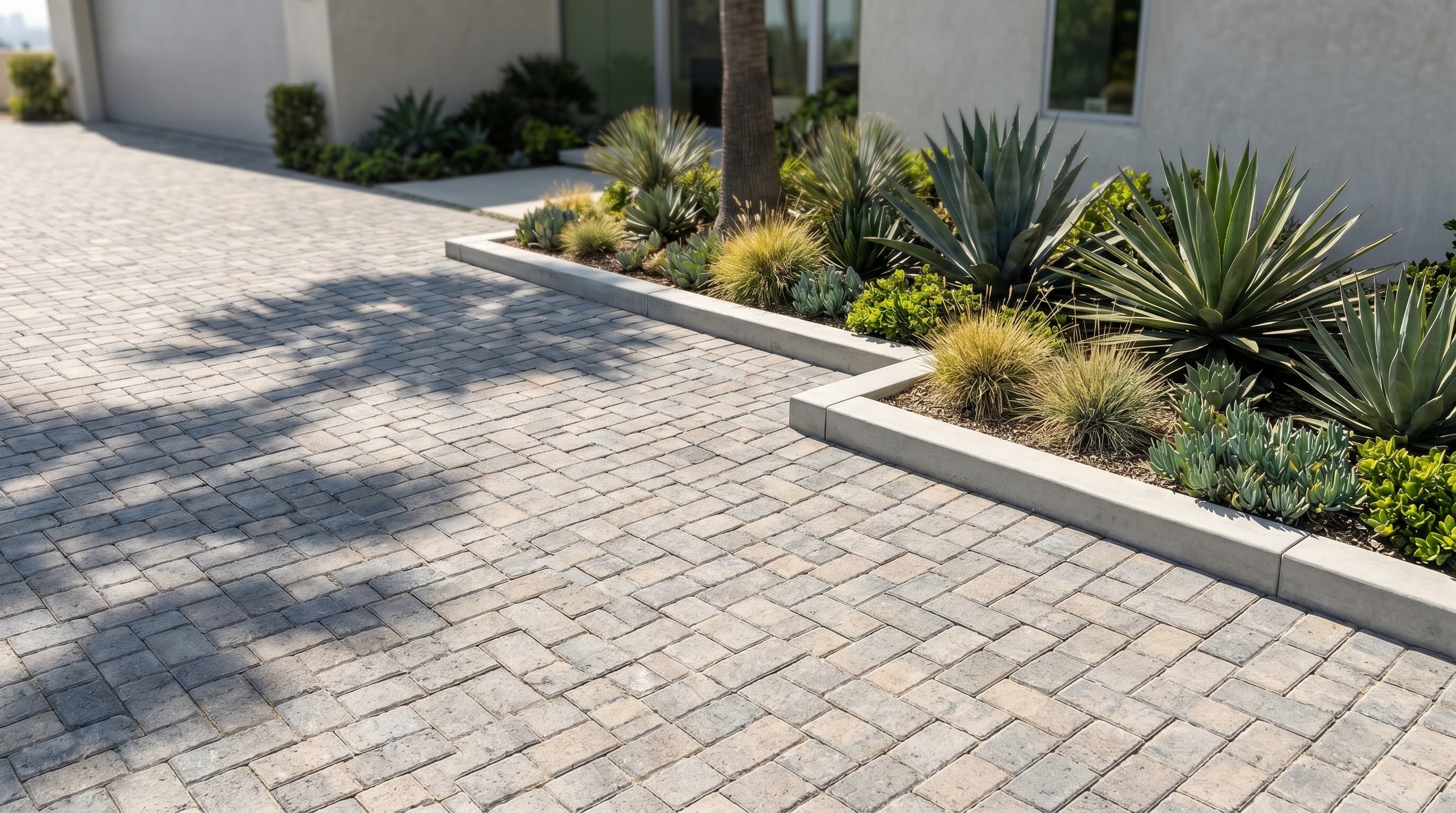
Interlocking pavers are individual blocks made from dense concrete, clay brick, natural stone, or porcelain. They are laid meticulously over a highly compacted sub-base of gravel and sand. Today, this flexible system is rapidly becoming the gold standard for high-end Los Angeles homes.
Built for Movement: The Seismic Advantage
Pavers are explicitly engineered to handle the exact problems that destroy poured concrete. Because a paver driveway consists of hundreds of individual stones, it acts like a flexible mat. The sand-filled joints between each paver easily absorb the shock of seismic tremors without transferring the stress.
When the clay soil swells and shifts, the pavers simply flex with the movement and settle right back into place. They handle heavy earth movements beautifully without cracking. Because of this adaptability, a premium paver driveway can last 25 to over 40 years in Southern California without ever suffering a major crack.
Curb Appeal and Design Flexibility
Nothing elevates a property quite like a custom paver driveway. They signal high-end quality and add immediate financial value to your home, especially in luxury neighborhoods like Beverly Hills, Pasadena, and San Marino.
Plus, you have ultimate design flexibility. You can choose classic traditional brick styles, sleek modern porcelain, or rustic natural stone to perfectly match your home's architecture.
Head-to-Head Comparison: Pavers vs Concrete
Here is a quick, straightforward breakdown to help you compare the two materials side-by-side.
Feature | Poured Concrete | Interlocking Pavers |
Upfront Cost | $8 to $15 per sq ft | $22 to $50 per sq ft |
Expected Lifespan | 10 to 20 years | 25 to 40+ years |
Cracking Risk | Very High | Zero to None |
Repair Cost | Expensive & Highly Visible | Cheap & Completely Seamless |
Upfront Installation Cost ($/Sq Ft)
If your primary focus is keeping the initial day-one budget as low as possible, standard concrete wins out. It generally ranges from $8 to $15 per square foot for a basic installation. Premium paver systems require significantly more manual labor, deep excavation, and sub-base engineering. As a result, a premium paver installation will cost between $22 and $50 per square foot upfront.
20-Year True Lifetime Value
The upfront price tag only tells half the story. The true lifetime value of pavers makes them the much smarter financial choice for long-term homeowners. A standard 600-square-foot plain concrete driveway might cost about $7,000 initially. But after years of expensive crack repairs and a highly likely full replacement, you will easily spend up to $35,000 over two decades.
Conversely, a premium paver driveway might cost $20,000 upfront. However, it requires almost zero financial upkeep over the next 20 years. Because you avoid the endless cycle of patching and replacing, pavers ultimately save you money in the long run.
Maintenance Requirements
Maintaining a standard concrete driveway can be a major headache. You have to seal it frequently to protect the porous surface from deep oil stains. When the cracks inevitably appear, you are forced to use unsightly patching compounds that ruin the look of your home.
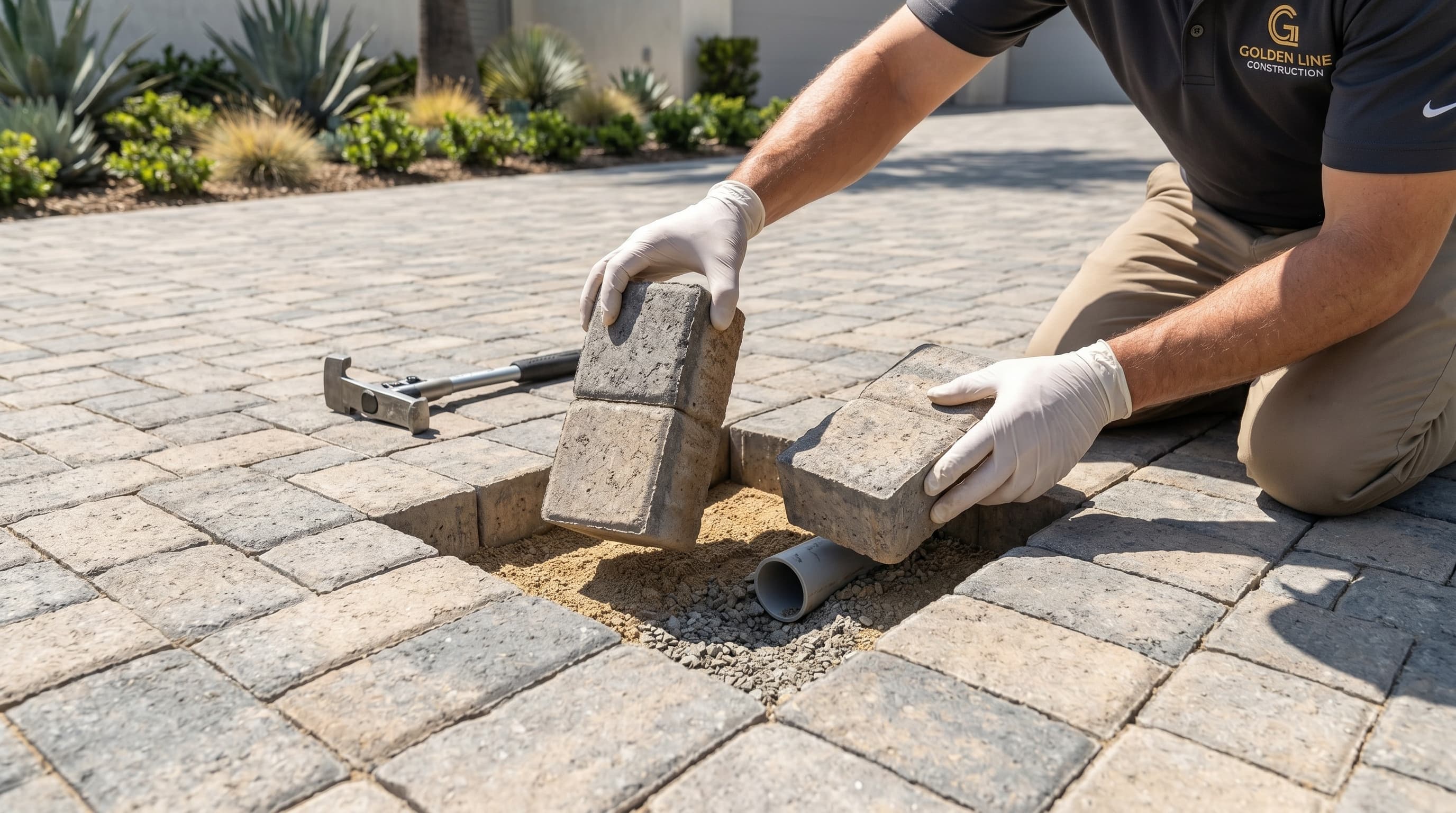
Pavers, on the other hand, are incredibly easy and cheap to maintain. If an oil spill ruins a spot, or an underground pipe needs fixing, you do not need a jackhammer. You simply lift the affected stones out of the way. Once the issue is resolved, you drop the exact same stones right back into place. There are absolutely no visible scars, and your driveway looks brand new.
5 Reasons Pavers Are the Better Choice for Southern California Homes
Choosing interlocking pavers isn't just about selecting a premium look. It is a highly practical choice for the unique climate and lifestyle of the West Coast.
Here are five undeniable reasons why homeowners are making the switch.
- Better Drainage and Permeability: Heavy winter storms can easily overwhelm local storm drains, leading to standing water on your property. Paver joints naturally allow rainwater to filter straight down into the earth, preventing dangerous pooling and slick surfaces.
- Easy Utility Line Access: If an underground pipe bursts beneath a concrete driveway, you have to break out the jackhammer. With pavers, workers can gently remove a small section of stones, fix the pipe, and lay the exact same stones back down with zero signs of repair.
- Higher Return on Investment: Pavers immediately boost your home's appraisal value. In competitive real estate markets like the Westside or South Bay, premium hardscaping significantly increases buyer interest and command a higher selling price.
- Immediate Use After Installation: Poured concrete requires a mandatory, frustrating cure time of up to a full week before you can safely park a vehicle on it. A paver driveway is fully compacted and ready for heavy traffic the exact minute the last stone is placed.
- Zero Structural Cracking: Because the entire surface is a flexible interlocking system, it adapts perfectly to earth movements. It will never develop the ugly, sprawling fractures that ruin standard concrete slabs.
Which Driveway Material Should You Choose?
The right choice ultimately depends on your immediate budget and your long-term property goals.
If you are working with a tight initial budget, or if you are flipping a basic investment property where keeping upfront costs low is the primary objective, standard poured concrete is a practical route to take. It provides a clean, familiar surface quickly and efficiently.
However, if you view your home as a long-term investment, or if you want to achieve a true luxury aesthetic that matches a high-end neighborhood, interlocking pavers are the clear winner. They completely protect you from the headache of ugly cracks, simplify underground repairs, and ultimately save you thousands of dollars by eliminating the 20-year cycle of tearing up and replacing damaged concrete slabs.
Conclusion
Your driveway is one of the largest and most visible features of your home's exterior. Investing in a durable, beautiful surface is an excellent way to elevate your property's daily functionality and long-term financial equity. Because every home features unique soil conditions, property lines, and architectural styles, the best way to determine your exact layout is with an on-site expert evaluation.
Contact us today to schedule your comprehensive, free local estimate, and let our skilled team build a driveway designed to last a lifetime.