Transforming your outdoor living space is one of the best ways to enjoy the beautiful Southern California climate. Whether you are looking to revitalize an aging driveway, build a stunning backyard patio, or create a luxurious pool deck, installing high-quality pavers completely elevates the look and feel of your property.
However, determining the exact paver installation cost in Los Angeles requires looking closely at several unique regional factors. Let us break down exactly what goes into a professional hardscaping estimate so you can budget for your dream project with complete confidence.
Understanding Hardscaping Estimates in Southern California
Upgrading your home with custom pavers is a fantastic, long-lasting investment for Los Angeles homeowners. Unlike poured concrete, which inevitably cracks under seismic activity, interlocking pavers offer incredible durability, easy repairs, and immediate curb appeal.
However, estimating the true paver installation cost in Los Angeles can be complex because quotes vary wildly from neighborhood to neighborhood. Your final price tag will heavily depend on local labor rates, the specific material you choose, and the unique physical conditions of your property.
Primary Factors Influencing Your Total Investment
Before selecting your specific materials, it is important to understand the core variables that will dictate the baseline price of your hardscaping project.
- Total Square Footage: Larger projects require more materials and labor, but often result in a slightly lower cost per square foot due to economies of scale.
- Site Accessibility: Moving heavy pallets of stone into tight backyards, narrow alleys, or steep hillside properties common in LA adds significant labor time.
- Existing Terrain: Removing thick slabs of old, reinforced concrete or performing extensive grading on unlevel yards will immediately increase your preparation costs.
Breaking Down Costs by Paver Material Type
The physical pavers themselves make up a substantial portion of your overall budget. Here is a comparison of the most common options available to Southern California residents.
Material Type | Average Material Cost Per Square Foot | Durability in Heat |
Concrete Pavers | $9 – $17 | High |
Brick Pavers | $11 – $23 | Excellent |
Natural Stone | $17 – $57+ | Maximum |
Labor and Installation Expenses in Los Angeles
High-quality labor is the most crucial component of a lasting driveway or patio. In earthquake-prone areas like Los Angeles, paying for expert installation and proper base preparation ensures your pavers will not shift or sink over time. Contractors typically break their labor charges down into the following distinct phases.
Demolition and Hauling Existing Concrete
Before any new work begins, your installation team must break apart and safely remove the old driveway, patio, or grass. Heavy machinery and dump fees for hauling heavy debris to local LA recycling facilities are factored into this phase.
Extensive Base Preparation and Grading
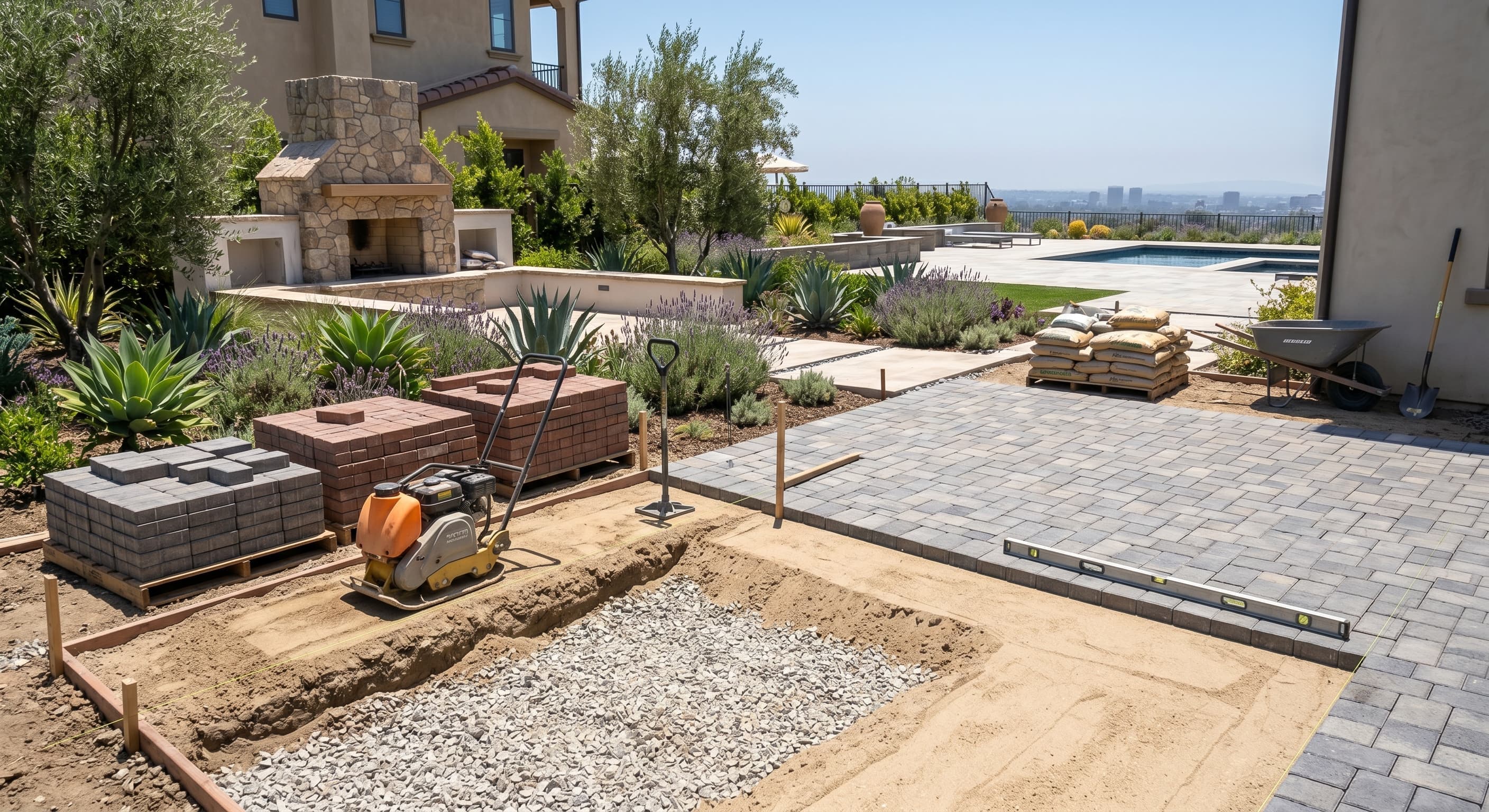
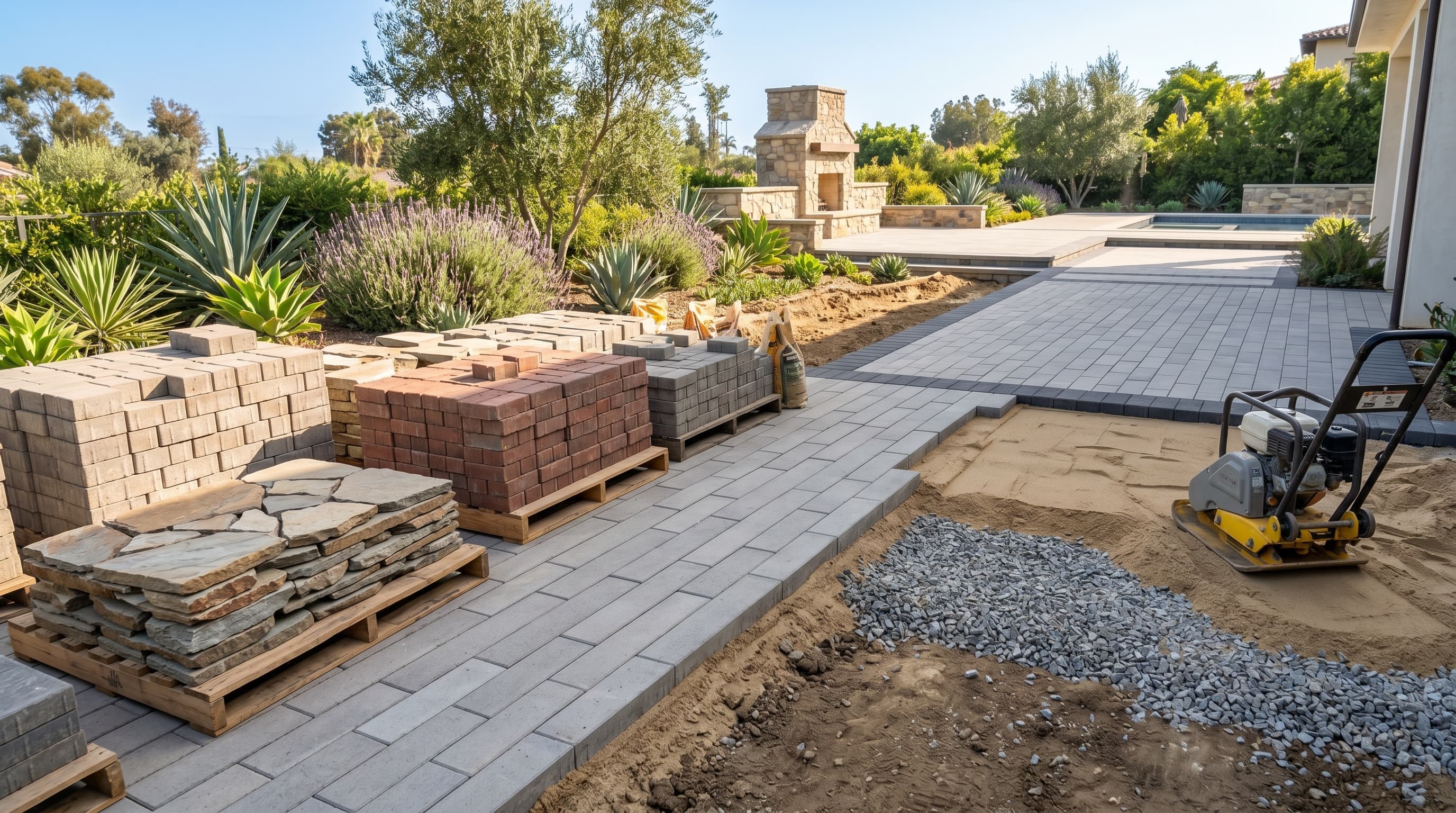
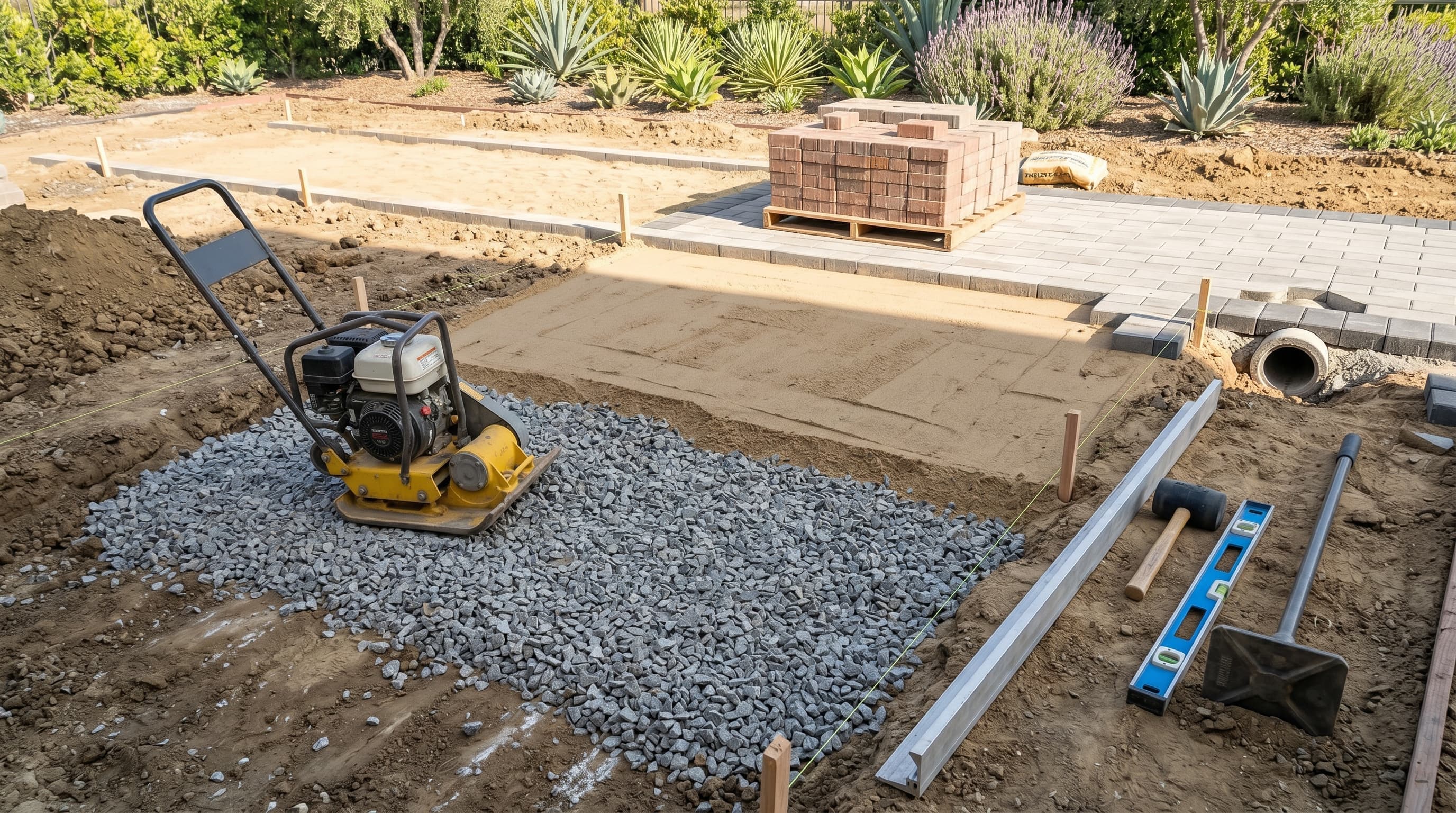
This is the most critical step for longevity. Workers will excavate the soil, compact the subgrade, and lay down a thick layer of crushed gravel. Proper grading ensures water flows away from your home's foundation during heavy winter rainstorms.
Professional Laying and Compaction
Once the base is perfectly level, the team meticulously cuts and lays each individual paver according to your chosen design. They then use heavy plate compactors to firmly set the stones into the bedding sand below.
Sanding and Sealing the Surface
Finally, specialized joint sand is swept between the pavers to lock them tightly in place and prevent weed growth. Applying a high-quality chemical sealer protects the surface from UV fading, oil stains, and Southern California's intense summer heat.
Are you ready to transform your outdoor living space? Contact our team today for a precise, custom quote tailored to your specific property.
Popular Paver Patterns and Customization Fees
The complexity of your chosen design directly impacts labor costs. Intricate patterns take significantly longer to cut and lay, resulting in higher installation fees compared to simple, straightforward grids.
Classic Herringbone Layouts
Herringbone is incredibly popular in Los Angeles driveways because the interlocking zigzag pattern effectively distributes weight and resists shifting under heavy vehicle traffic.
However, this design requires contractors to make precise, angled cuts at every border, which increases both labor time and material waste.
Elegant French Ashlar Designs
This layout utilizes multiple different sizes of pavers to create a random, puzzle-like appearance that looks stunning on pool decks and large patios.
Because the installers must carefully track the ratio of different stone sizes to avoid long continuous seams, the meticulous installation process commands a premium labor rate.
Modern Straight Stack Alignments
Also known as a running bond or stack bond, this simple grid layout is highly efficient to install. The linear design perfectly complements contemporary Southern California architecture and is generally the most cost-effective pattern since it requires minimal custom cutting along the edges.
Navigating Permitting and Local Drainage Regulations
Before excavation begins, navigating local compliance is a crucial step that will affect your final budget. Many Los Angeles municipalities have strict rules regarding permeable surfaces and water runoff due to ongoing drought conditions and environmental protections.
Pulling the proper hardscaping permits is a necessary expense to factor into your quote. If you are replacing a large concrete driveway, the city may require you to install permeable pavers to ensure rainwater filters naturally into the ground rather than overwhelming the municipal storm drains.
Hidden Construction Costs to Anticipate
Once the digging begins, unexpected surprises can quickly inflate the initial quote. Anticipating these common Southern California site issues will help you set a realistic contingency budget.
- Root System Removal: Dealing with mature tree roots hidden underground that must be carefully extracted to prevent future lifting.
- Upgrading Drainage Pipes: Installing French drains or PVC catch basins to effectively manage rainwater and redirect it away from your foundation.
- Soil Stabilization: Treating expansive clay soils common in parts of LA County, which swell when wet and require a deeper gravel base to prevent the pavers from buckling.
Maximizing Your Property Value and Curb Appeal
While a custom paver installation in Los Angeles requires a significant upfront budget, the long-term return on investment is exceptional. The unparalleled durability, immediate aesthetic appeal, and overall increase in home value make pavers far superior to basic poured concrete.
Because interlocking stones seamlessly flex with the earth during seismic activity, you avoid the inevitable cracking and costly repairs associated with traditional slabs.
Are you ready to elevate your home's exterior? Contact us today to book a free onsite estimate and start designing the perfect hardscape for your property.