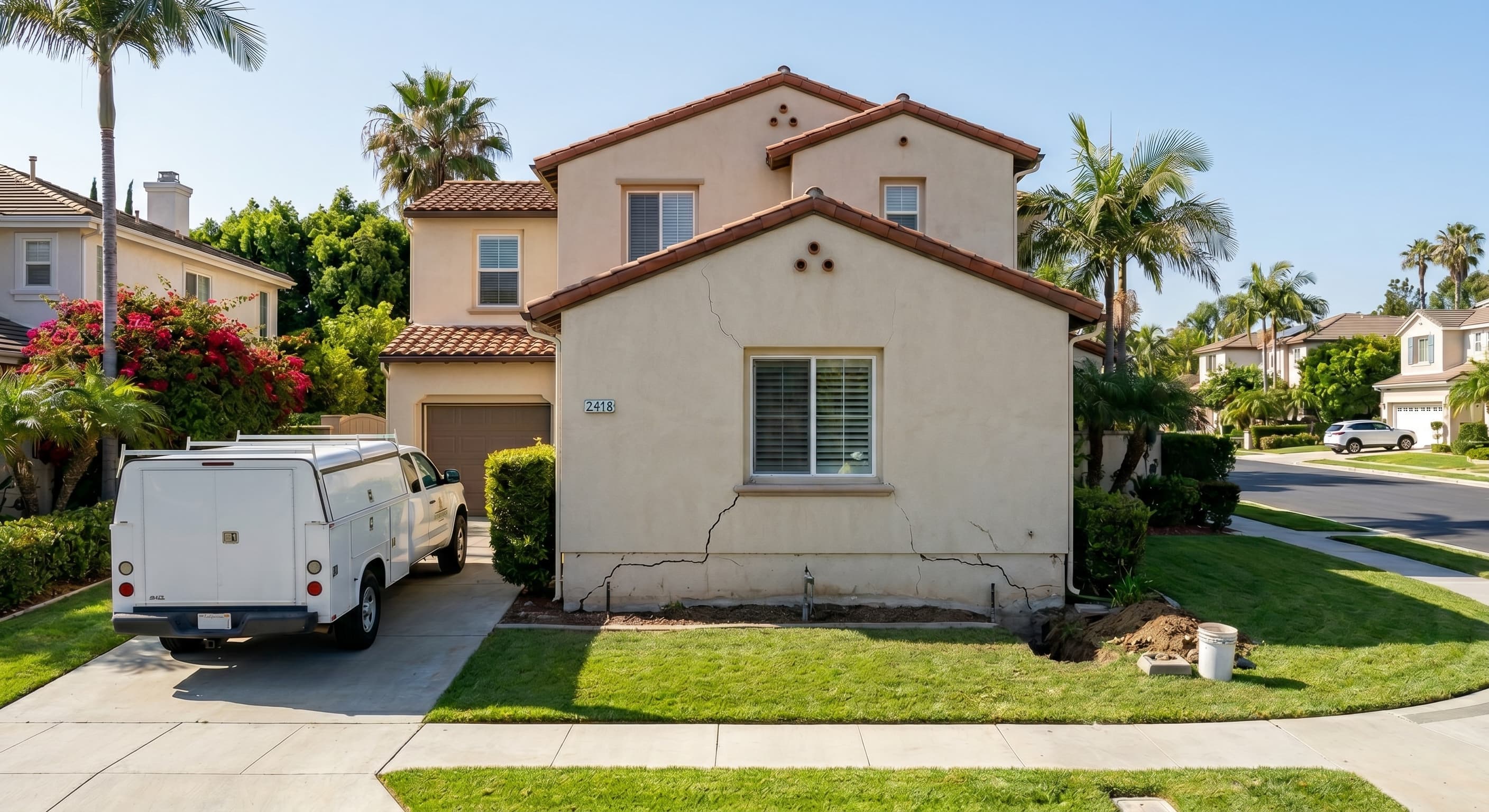
Home insurance may cover foundation repair when damage is caused by a covered event, but it generally does not cover foundation problems caused by normal wear, earth movement, settlement, neglect, or other excluded conditions.
For Los Angeles homeowners, identifying the cause of foundation damage is especially important. Earthquakes, soil movement, drainage problems, and aging can all affect a foundation, but insurance treats each cause differently.
Does Home Insurance Cover Foundation Repair?
The answer depends on what caused the foundation damage and what your policy covers. Homeowners insurance generally covers damage resulting from specific covered events rather than foundation repairs themselves.
For example, if a covered event directly causes structural damage, related foundation damage may be covered. However, problems caused gradually by settlement, maintenance issues, wear and tear, or excluded earth movement are generally not covered.
California's Department of Insurance identifies covered perils such as fire, windstorm, and certain sudden and accidental water damage. It also lists earthquake, earth movement, seepage, wear and tear, maintenance, and neglect among commonly excluded causes.
Your policy's language, exclusions, deductible, and the circumstances surrounding the damage ultimately determine coverage.
What Causes Foundation Damage in Los Angeles?
Foundation problems can have several causes. Determining the underlying cause is important because it affects both the appropriate repair and potential insurance coverage.
Earthquakes and Earth Movement
Earthquakes can place substantial stress on a home's foundation and cause cracking, shifting, or settlement.
Standard homeowners insurance in California generally does not cover earthquake damage. Separate earthquake insurance may provide coverage for qualifying earthquake-related losses.
Water Damage and Drainage Problems
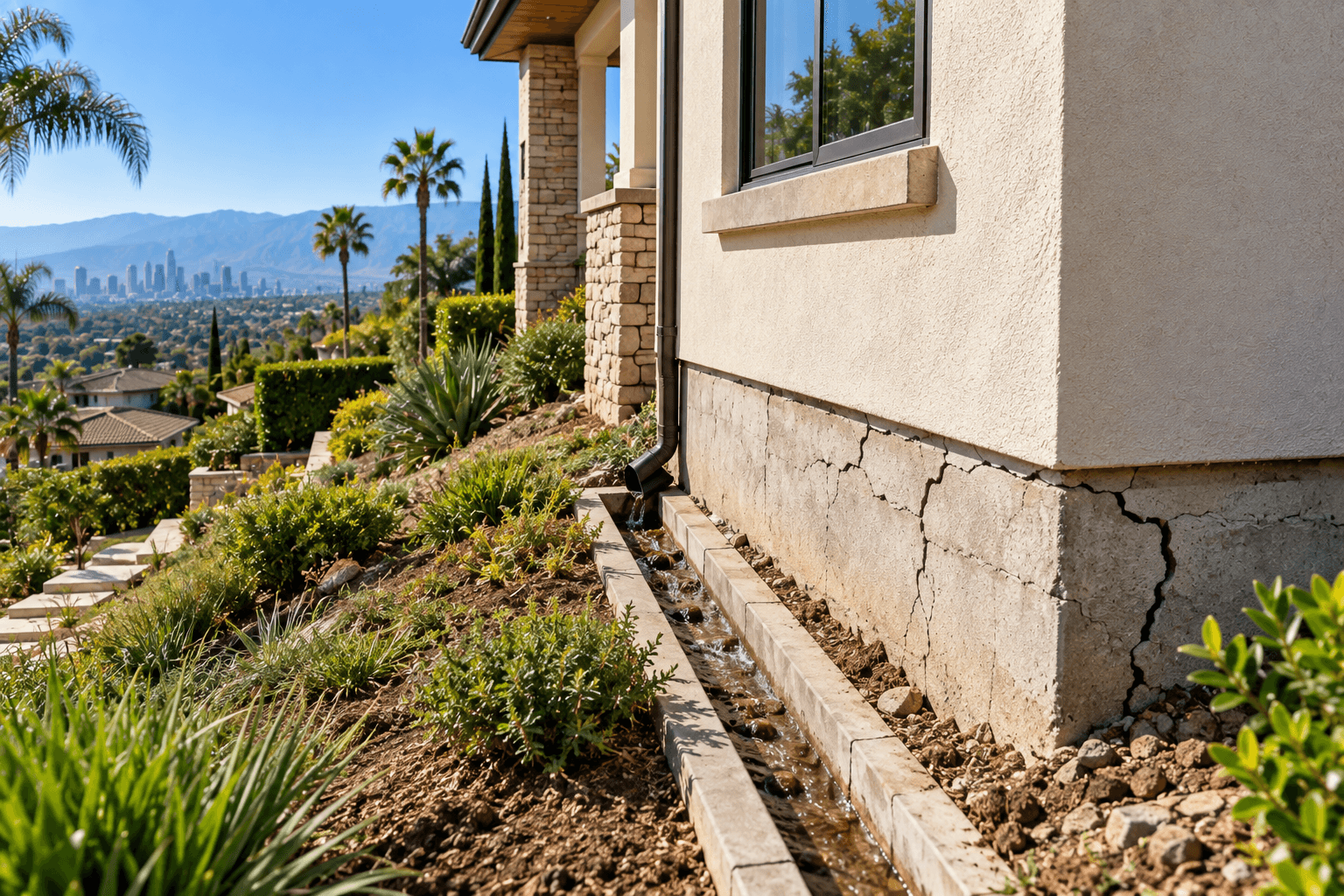
Poor drainage, improper grading, leaks, and persistent moisture can contribute to foundation problems. Water may collect around the foundation or enter areas where it can cause deterioration.
Insurance coverage depends on the source of the water. Certain sudden and accidental water damage may be covered, while flood, seepage, and some long-term leaks are generally excluded.
Soil Settlement and Expansive Soil
Changes in soil conditions can cause a foundation to move unevenly. Settlement can occur as soil compresses, while expansive soil can swell and shrink as moisture levels change.
These conditions may result in cracks, uneven floors, sticking doors, or other signs of movement. Gradual soil movement and earth-related damage are commonly excluded from standard homeowners policies.
Aging, Wear, and Poor Maintenance
Foundation problems can also develop from age, deterioration, unresolved drainage issues, or neglected maintenance.
These gradual conditions are generally treated differently from sudden damage caused by a covered event. Wear and tear, maintenance issues, and neglect are commonly excluded under standard homeowners policies.
When Does Home Insurance Cover or Exclude Foundation Repairs?
The key question is whether a covered event caused the damage.
Situation | How Insurance May Apply |
|---|---|
Covered event causes structural damage | Related foundation damage may be considered for coverage. |
Sudden and accidental water damage | May be covered depending on the cause and policy terms. |
Earthquake damage | Generally excluded from standard homeowners insurance; earthquake coverage may apply. |
Earth movement or settlement | Commonly excluded. |
Long-term leaks or seepage | Generally excluded. |
Wear, maintenance, or neglect | Generally excluded. |
Because policies differ, homeowners should review their actual policy before assuming that a foundation repair insurance claim will be accepted.
What Should You Do If You Discover Foundation Damage?
If you notice foundation cracks or movement, document the problem before deciding how to proceed.
Document the Damage
Take photographs and videos of cracks, uneven floors, water intrusion, or other visible problems. Record when you first noticed the issue and whether it appears to be getting worse.
Keep receipts for reasonable temporary measures taken to prevent additional damage.
Review Your Insurance Policy
Check the sections covering dwelling damage, water damage, earth movement, earthquake coverage, exclusions, and deductibles.
Pay particular attention to exclusions because the cause of the foundation damage often determines whether coverage applies.
Contact Your Insurance Company
If you believe the damage resulted from a covered event, contact your insurance company or agent.
Ask what documentation is required, whether an adjuster will inspect the property, and what your deductible would be if the claim is approved.
Get a Professional Foundation Assessment
A professional assessment can help determine the likely cause and severity of the problem. An inspection may consider foundation cracks, drainage, soil conditions, structural movement, and other contributing factors.
What Foundation Repairs May Involve
The right repair depends on the foundation type, extent of damage, and underlying cause.
Crack Repair and Structural Reinforcement
Some foundation cracks can be repaired using appropriate structural or waterproofing methods. More serious movement may require reinforcement or other corrective work.
The cause should be addressed rather than simply covering the visible crack.
Drainage and Waterproofing Improvements
When moisture contributes to foundation problems, repairs may include improving drainage, correcting grading, controlling runoff, or waterproofing affected areas.
Addressing the source of water can help prevent the same problem from recurring.
Foundation Stabilization and Underpinning
Significant foundation movement may require stabilization or underpinning. These methods provide additional support to areas affected by settlement or structural movement.
The appropriate solution depends on the property's specific conditions, so repairs should follow a professional assessment.

How to Determine Who Pays for Foundation Repairs?
Start by determining what caused the damage.
If a covered event caused the foundation damage, your homeowners insurance may provide coverage according to the policy. If the problem resulted from excluded earth movement, settlement, wear and tear, neglect, or long-term water intrusion, the homeowner may be responsible.
The deductible also affects the amount an insurer may pay.
If an insurer denies your claim, review the written explanation and the policy language supporting the decision. California's Department of Insurance provides guidance for homeowners dealing with property claims and disputed settlements.
Repair costs also depend on the scope and method of work. Homeowners can review this guide to foundation repair costs to understand the factors that can affect pricing.
Conclusion
So, does home insurance cover foundation repair? Sometimes. Coverage generally depends on the cause of the damage and the specific terms of your policy.
Covered events may qualify for protection, while earthquake damage, earth movement, settlement, wear and tear, neglect, and certain long-term water problems are commonly excluded from standard homeowners insurance.
If you discover foundation damage, document it, review your policy, contact your insurer when appropriate, and have the problem professionally assessed before beginning major repairs.