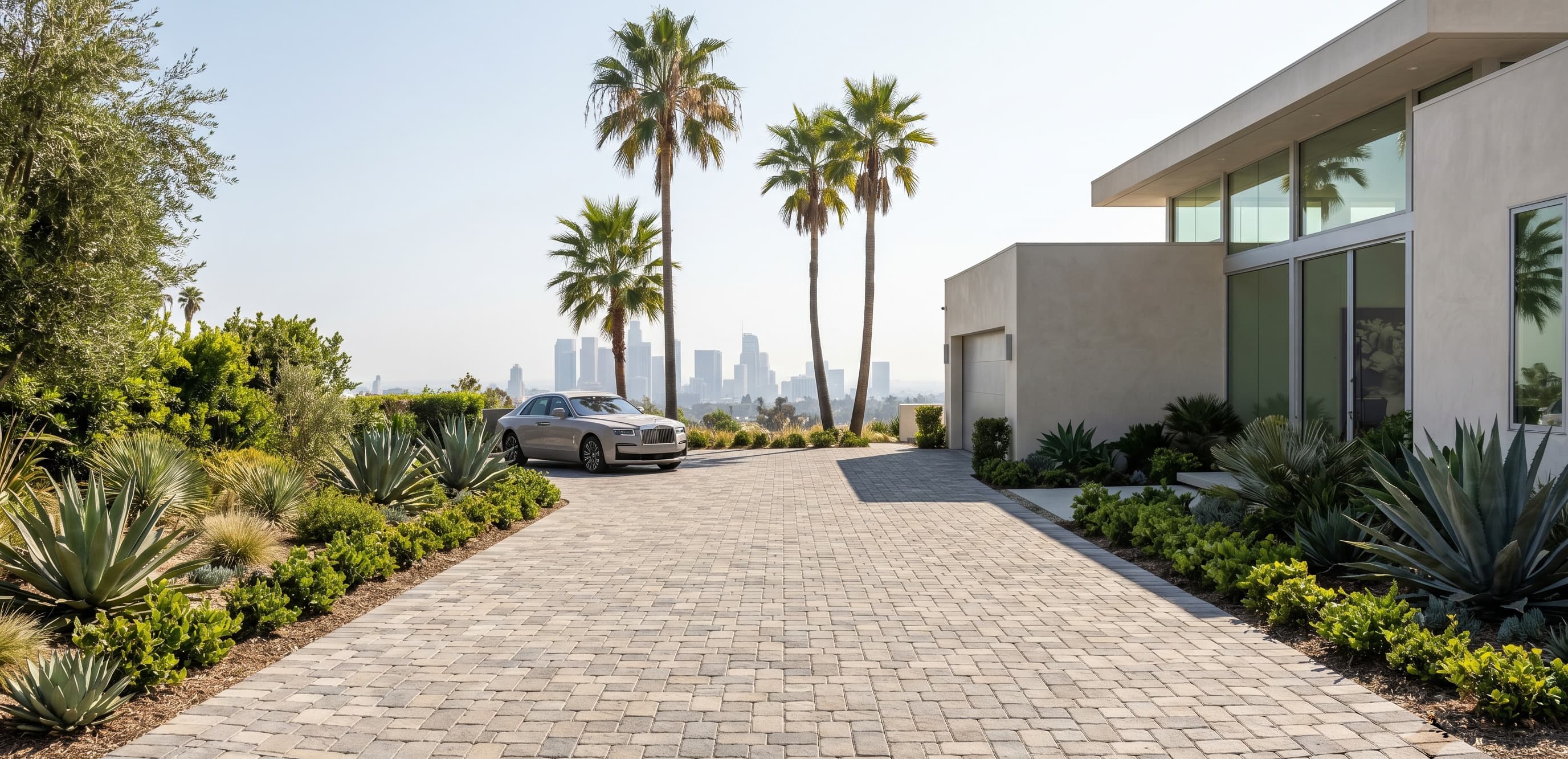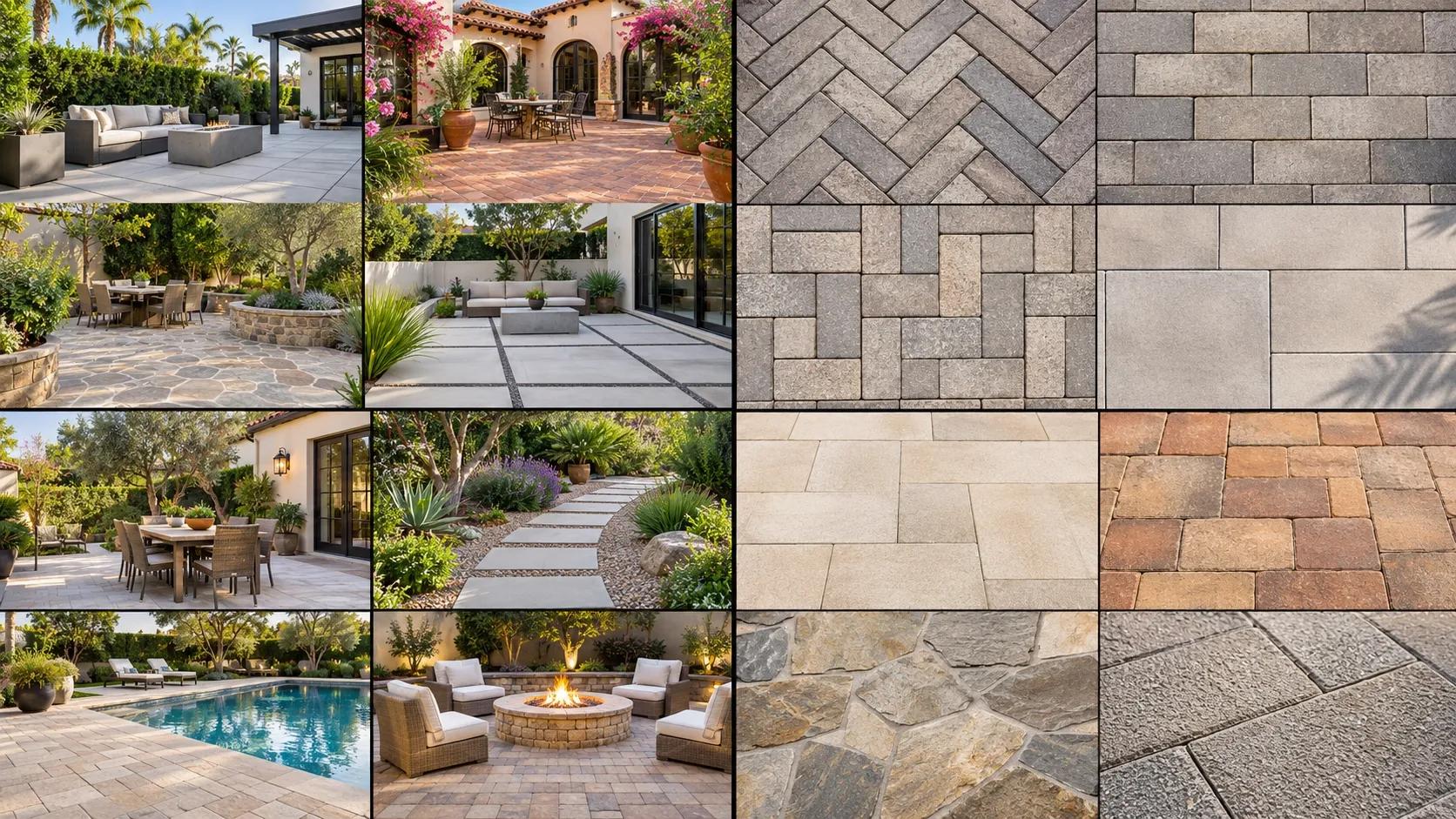
The best backyard paver design ideas combine attractive patterns, practical materials, and a layout that suits your outdoor space. In Los Angeles, your choice should also account for strong sunlight, outdoor entertaining, drainage, and the style of your home.
A well-planned paver patio can create a comfortable dining area, define garden pathways, or make a small backyard feel more organized. The right combination of colors, textures, and patterns helps connect these spaces without making the yard look crowded. Here are practical design ideas to help you plan a backyard that looks good and works for everyday use.
Popular Backyard Paver Design Ideas for Los Angeles Homes
Your home's architecture is a useful starting point when choosing backyard pavers. A contemporary property may suit clean lines and neutral colors, while a Spanish-style home can look better with warmer tones and textured surfaces.
Modern Backyard Paver Patio Designs
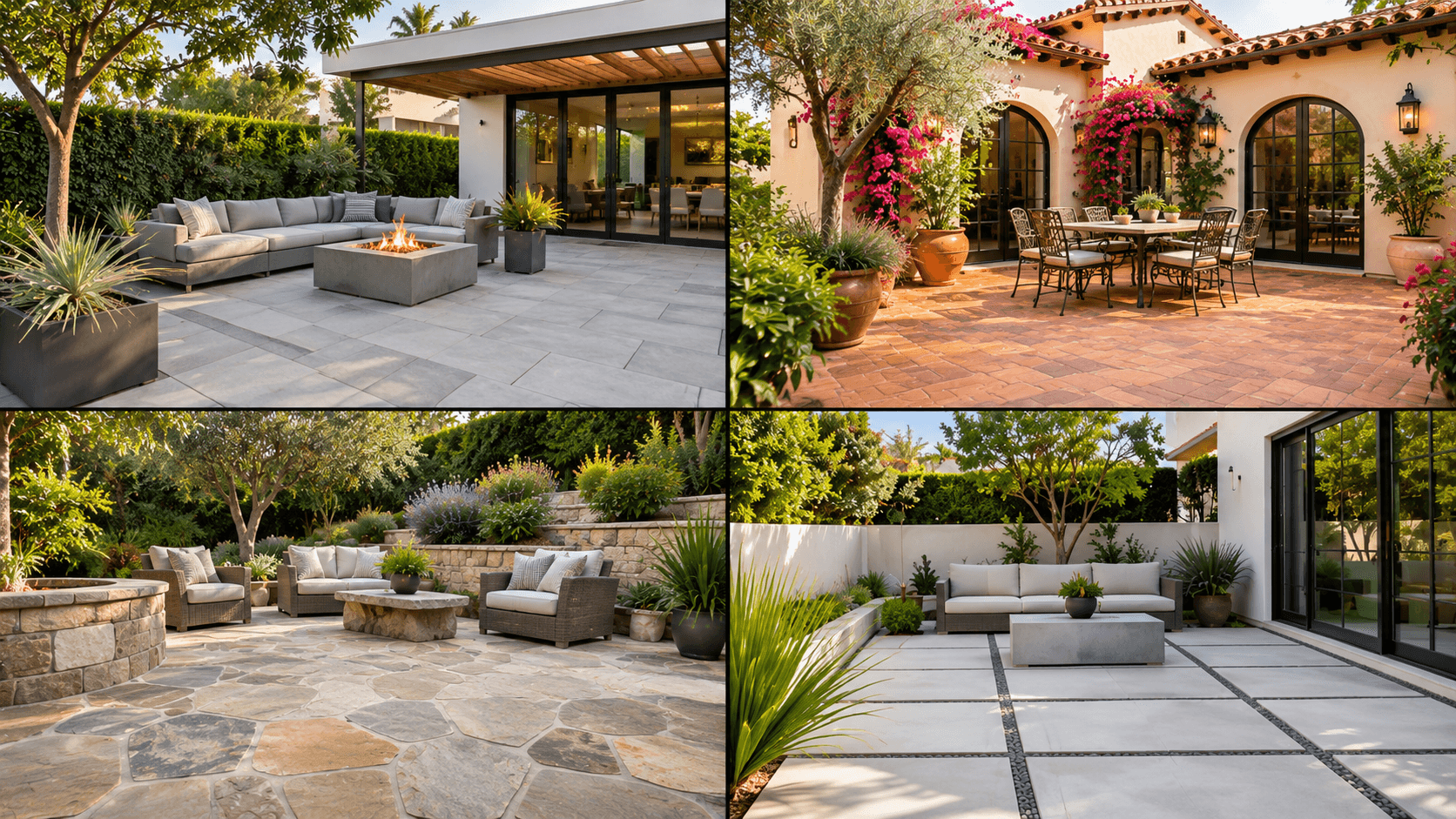
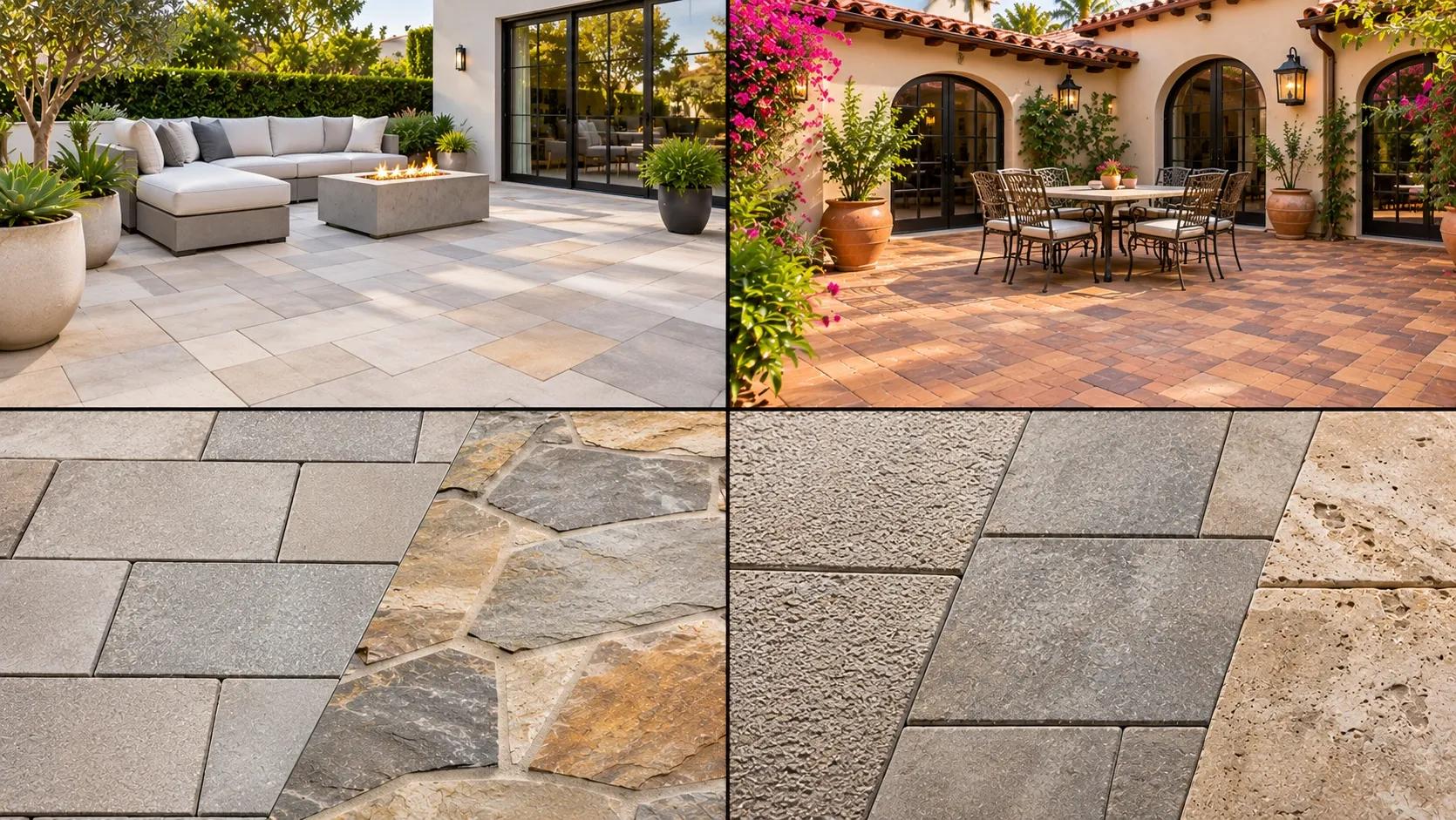
Modern backyard designs often use large concrete pavers, simple layouts, and restrained color combinations. Gray, charcoal, beige, and soft white tones create a clean appearance without competing with other outdoor features.
For a modern patio, consider:
- Large rectangular pavers arranged in straight lines.
- Consistent spacing between individual pavers.
- A simple border in a slightly darker color.
- Minimal planting around the patio edges.
You can also combine a large paver patio with outdoor furniture and built-in seating. This creates a defined gathering space while keeping the overall design uncluttered.
Mediterranean and Spanish-Style Paver Designs
Mediterranean and Spanish-style homes often pair well with warm, natural-looking materials. Terracotta-inspired colors, sandy beige, muted red, and brown tones can complement stucco walls, tile roofs, and traditional landscaping.
Consider using pavers with gently varied colors rather than choosing one uniform shade. A subtle variation gives the surface a more natural appearance.
Curved patio edges, decorative borders, and planting areas can also soften the layout. Avoid adding too many competing patterns, especially if your home already has decorative exterior details.
Natural Stone-Look Paver Designs
Natural stone-look pavers bring texture and variation to backyard spaces. Options such as travertine, slate-look concrete, and other stone-inspired surfaces can create a more organic appearance.
These designs work particularly well around garden seating areas, outdoor dining spaces, and patios connected to landscaped yards.
If you prefer genuine stone, consider how its surface, color, and maintenance requirements fit your property. Natural stone can vary in porosity and durability, so the specific material matters as much as its appearance.
Minimalist Paver Designs With Clean Lines
Minimalist designs focus on spacing, proportion, and simplicity. Instead of combining several colors and patterns, choose one main paver style and use it consistently.
For example, large square pavers with narrow joints can create a calm, structured patio. A simple contrasting border can define the space without making it visually busy.
This approach is especially useful when your backyard already includes a pool, mature trees, decorative walls, or other prominent features.
Backyard Paver Patterns That Make an Outdoor Space Stand Out
Paver patterns influence how large, formal, or relaxed a backyard feels. The same paver can create very different results depending on its arrangement.
Herringbone Paver Patterns
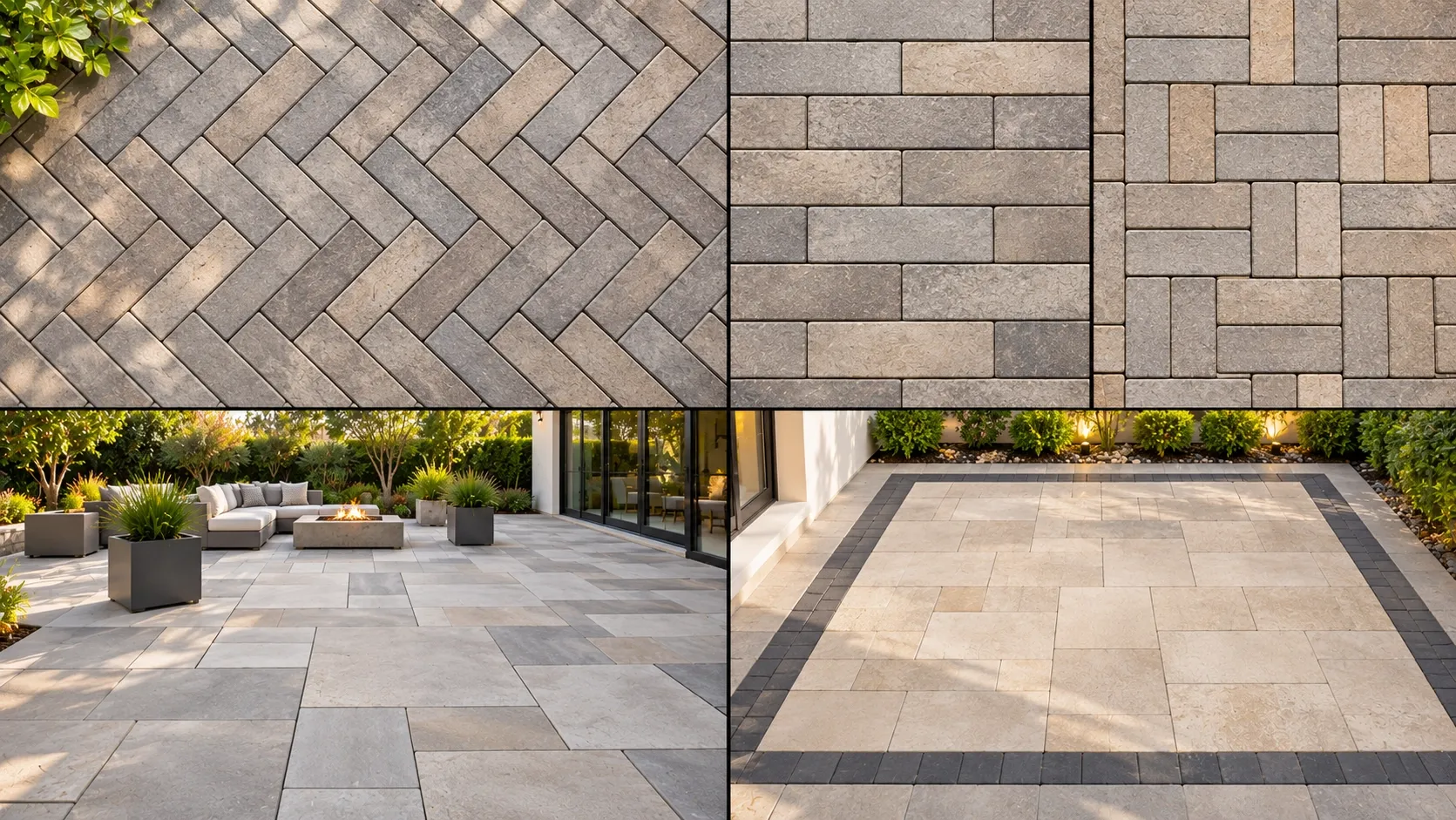
Herringbone uses rectangular pavers arranged in a repeating zigzag pattern. It creates movement and gives a patio a distinctive appearance.
The pattern can work in both traditional and contemporary outdoor spaces. Smaller rectangular pavers create a more detailed surface, while larger units produce a simpler look.
Herringbone can also be useful in areas where you want a strong visual pattern, such as a main patio or a transition between outdoor spaces.
Running Bond and Basketweave Patterns
Running bond places each row of rectangular pavers so that the joints are offset from the row beside it. It creates a familiar brick-like appearance that works with many home styles.
Basketweave uses pairs of rectangular pavers arranged in alternating directions. This produces a repeating woven effect that can suit traditional patios and garden paths.
Both patterns offer a clear layout without requiring several paver colors. Your choice depends on whether you prefer a simple linear appearance or a more decorative arrangement.
Large-Format and Mixed-Size Paver Layouts
Large-format pavers can make a backyard patio feel more open. Their broader surfaces create fewer visible joints, which can give the area a clean and spacious appearance.
Mixed-size layouts use different paver dimensions within a planned pattern. They can add visual interest without relying on contrasting colors.
Before choosing either option, consider the dimensions of your yard. Oversized pavers may look out of proportion in a very narrow space, while small units can make a large patio feel overly busy.
Decorative Borders and Contrasting Patterns
A border can separate the patio from surrounding landscaping or highlight its shape. For example, a charcoal border around light beige pavers creates a defined edge.
You can also use a different laying direction to distinguish one outdoor area from another. A main patio might use a running bond pattern, while a nearby seating section uses a contrasting border.
Keep these details consistent. Too many borders, colors, and patterns can make the backyard feel fragmented.
Backyard Paver Ideas for Different Outdoor Spaces
A good paver layout should respond to how you use each part of your backyard. A dining area has different needs from a garden path or poolside surface.
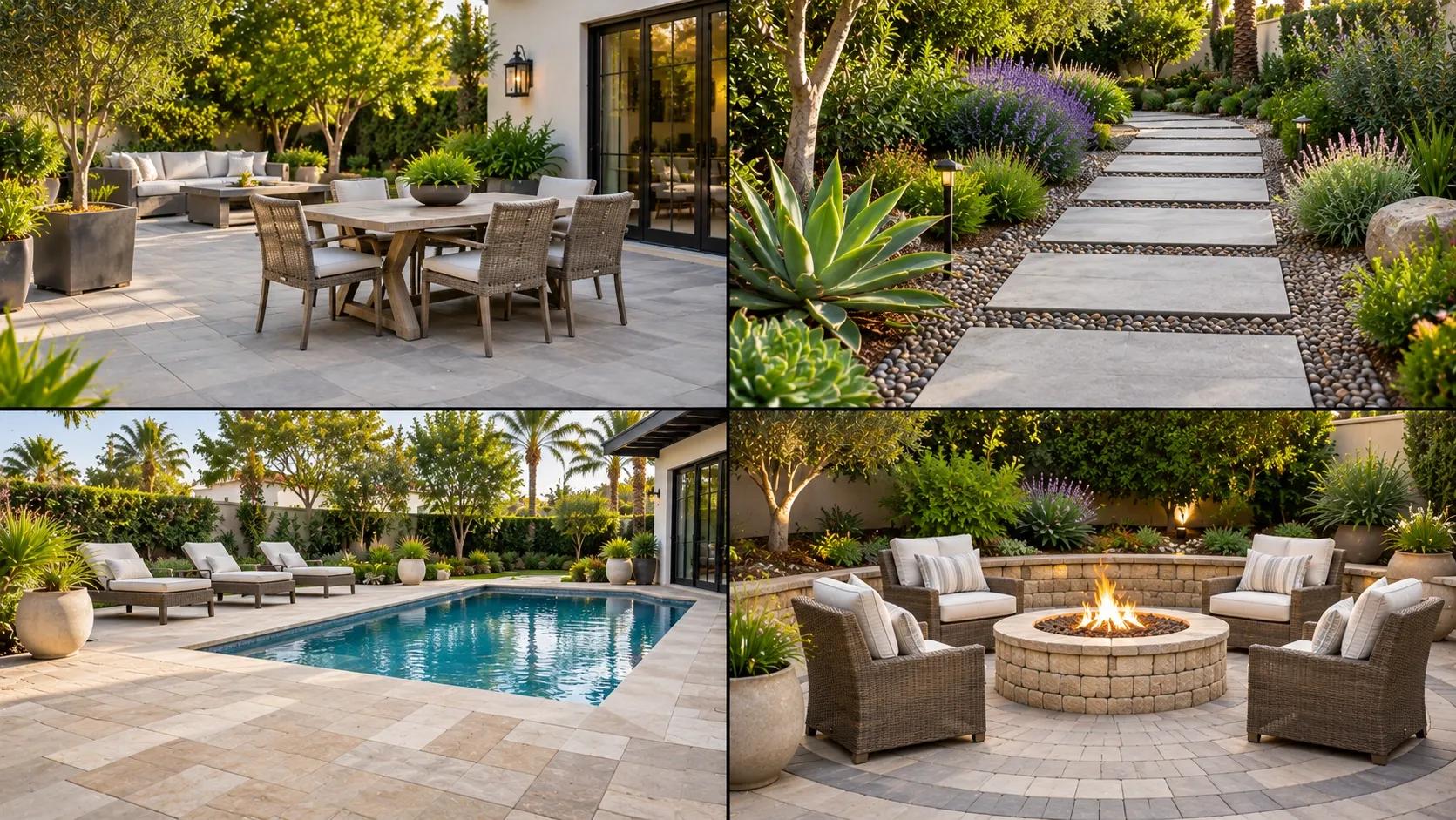
Paver Patio Designs for Outdoor Dining and Seating
An outdoor dining area needs enough room for the table, chairs, and comfortable movement around them. Choose a stable, relatively level surface with enough space to pull chairs out without reaching the edge of the patio.
For a seating area, consider a rectangular or square layout that fits your furniture arrangement. Neutral pavers can also make it easier to update cushions, umbrellas, and other outdoor accessories later.
Paver Walkways and Garden Paths
Paver walkways connect different parts of a backyard while protecting planting areas from regular foot traffic.
A straight path can create a formal appearance, while a gently curved walkway may feel more natural in a landscaped garden. Individual stepping stones with gravel or ground cover between them can also create a lighter visual effect.
Make sure the walkway has enough width for comfortable movement. The surface should remain stable, with suitable spacing and a properly prepared base.
Poolside Paver Designs
Poolside pavers should balance appearance, comfort, and safety. Look for surfaces designed for outdoor use with suitable slip resistance when wet.
Lighter colors can help create a bright pool area, but color alone does not determine how hot a surface becomes. Material composition, texture, and direct sun exposure also matter.
Choose a finish intended for poolside conditions and consider how it feels under bare feet. Proper installation and drainage are equally important around a swimming pool.
Paver Designs for Fire Pit and Entertainment Areas
A fire pit area can become a natural gathering point in your backyard. A circular or square paver layout helps define the seating space and separate it visually from the rest of the patio.
Choose materials and clearances that suit the fire feature and follow its installation requirements. Keep furniture, plants, and other combustible materials at appropriate distances.
For larger entertainment areas, use a consistent paver style to connect the fire pit, dining space, and surrounding patio.
Best Paver Colors, Materials, and Finishes for Backyard Designs
The right material and color combination should complement your home while meeting the practical needs of your backyard.
Light and Neutral Paver Colors for a Modern Look
Beige, cream, light gray, and soft white pavers create a bright, understated appearance. They can work particularly well with modern homes, neutral exterior finishes, and simple landscaping.
Lighter surfaces may also absorb less solar heat than darker alternatives, although the actual temperature depends on the material and finish. Request samples and compare them outdoors before making a final decision.
Warm Earth Tones for Mediterranean Backyards
Sand, terracotta, brown, and muted red tones can complement Mediterranean and Spanish-style properties. These colors also pair naturally with green planting, wooden furniture, and warm exterior finishes.
If you want variation, select pavers with related shades rather than several unrelated colors. This keeps the design coordinated while avoiding a flat, uniform appearance.
Concrete Pavers vs Natural Stone Pavers
Concrete pavers offer a wide selection of shapes, colors, sizes, and patterns. They are often a practical choice when you want design flexibility and a consistent manufactured product.
Natural stone pavers offer individual variations in color and texture. Travertine and other stone options can create a distinctive outdoor surface, but their maintenance and performance depend on the specific stone.
Compare these factors before choosing:
- Appearance: Concrete offers consistent styles, while natural stone has more individual variation.
- Budget: Costs depend on the product, supply, preparation, and installation.
- Maintenance: Some stones need more attention to sealing and cleaning.
- Performance: Suitability depends on the material, climate exposure, and intended use.
Textured and Slip-Resistant Paver Finishes
Texture affects both the appearance and usability of a paver surface. Smooth finishes can create a contemporary look, while textured surfaces may provide better traction in suitable applications.
For pool areas and frequently wet spaces, prioritize a finish rated for the intended conditions. Ask about slip resistance, cleaning requirements, and how the surface performs when wet.
Backyard Paver Ideas for Small or Sloped Spaces
Small backyards benefit from simple layouts that make the available space feel organized. Large-format pavers can reduce visual clutter, while a consistent color palette helps connect separate areas.
Consider these approaches:
- Use a single main paver color to create visual continuity.
- Place pavers in a consistent direction to guide the eye through the yard.
- Use narrow garden paths to connect seating and planting areas.
- Combine a compact patio with gravel or planting beds.
- Avoid too many small decorative sections that divide the space.
Sloped backyards need additional planning. Depending on the grade, the design may require steps, retaining features, or separate level areas. Proper grading and drainage help prevent water from collecting around the patio or moving toward the home.
Do not choose a layout based on appearance alone. The slope, soil conditions, and intended use should guide the installation approach.
Creative Ways to Combine Pavers With Grass, Gravel, and Landscaping
Pavers do not need to cover the entire backyard. Combining them with other landscape materials can create a more varied and natural outdoor space.
For example, large square pavers separated by strips of grass can create a modern stepping-stone path. Gravel between pavers offers a lower-maintenance alternative to grass, although it needs suitable edging to keep the stones in place.
You can also use planting beds along the patio perimeter. Low-growing plants soften hard edges and create a transition between paved areas and the garden.
Think about how these materials will perform together. Grass needs suitable sunlight and water, while gravel requires containment and occasional maintenance. Choose combinations that fit the actual conditions in your yard.
How to Choose the Right Paver Design for Your Los Angeles Backyard
Start with the way you want to use your backyard. If you regularly host meals, prioritize a comfortable dining patio. If you prefer gardening, give more space to pathways and planting areas.
Next, consider your home's architecture, the available space, and your preferred maintenance level. Collect a few paver samples and compare them against your exterior walls, fencing, and landscaping in natural daylight.
Pay attention to practical details as well. Los Angeles properties can have different sun exposure, soil conditions, and drainage needs. A suitable design should account for these conditions before installation begins.
Finally, establish a realistic budget. The total paver installation cost depends on the selected material, area size, excavation, base preparation, access, and installation details.
Conclusion
The best backyard paver design is one that fits your home, outdoor space, and everyday needs. Modern layouts, Mediterranean colors, natural stone finishes, and decorative patterns can all work well when chosen with the property's architecture in mind.
Think beyond the appearance of individual pavers. Consider how people will move through the yard, where furniture will sit, and how the surface will handle sunlight and water. A well-planned layout brings these details together into a backyard that feels comfortable and cohesive.
Goldenline Construction provides hardscape and paver services for homeowners in the greater Los Angeles area. If you are planning a backyard upgrade, you can discuss your project with the team and explore a design suited to your property.