Yes, you generally need a permit for a bathroom remodel in Los Angeles when the project involves construction, plumbing, electrical, or other regulated work. Even a straightforward bathroom renovation may require permits, although some residential bathroom remodels with no structural changes can qualify for an express permit process.
Understanding Los Angeles bathroom permit requirements before work begins can help you avoid delays, inspection problems, and costly corrections. The exact requirements depend on what you plan to change, whether the work affects structural components or building systems, and which local jurisdiction handles your property.
When Is a Bathroom Remodeling Permit Required in Los Angeles?
A bathroom remodeling permit is generally required when the work involves construction or changes to regulated building systems. In the City of Los Angeles, LADBS specifically identifies residential kitchen and bathroom remodels with no structural changes as work that can qualify for an express permit. That does not mean the work is automatically permit-free; it means the project may qualify for a simplified permit process without a standard plan review.
For homeowners, the safest approach is to determine permit requirements based on the actual scope of work before demolition begins. A cosmetic update and a full bathroom renovation can have very different permitting requirements.
If your project includes changes to plumbing, electrical wiring, walls, structural framing, or other building systems, additional permits or review may be necessary.
Which Bathroom Remodeling Projects Typically Need Permits?
The need for a bathroom remodel permit Los Angeles homeowners encounter often depends less on how large the renovation looks and more on what systems are being changed. A project that appears cosmetic from the outside can still involve plumbing or electrical work behind the walls.
Changing Plumbing or Moving Fixtures
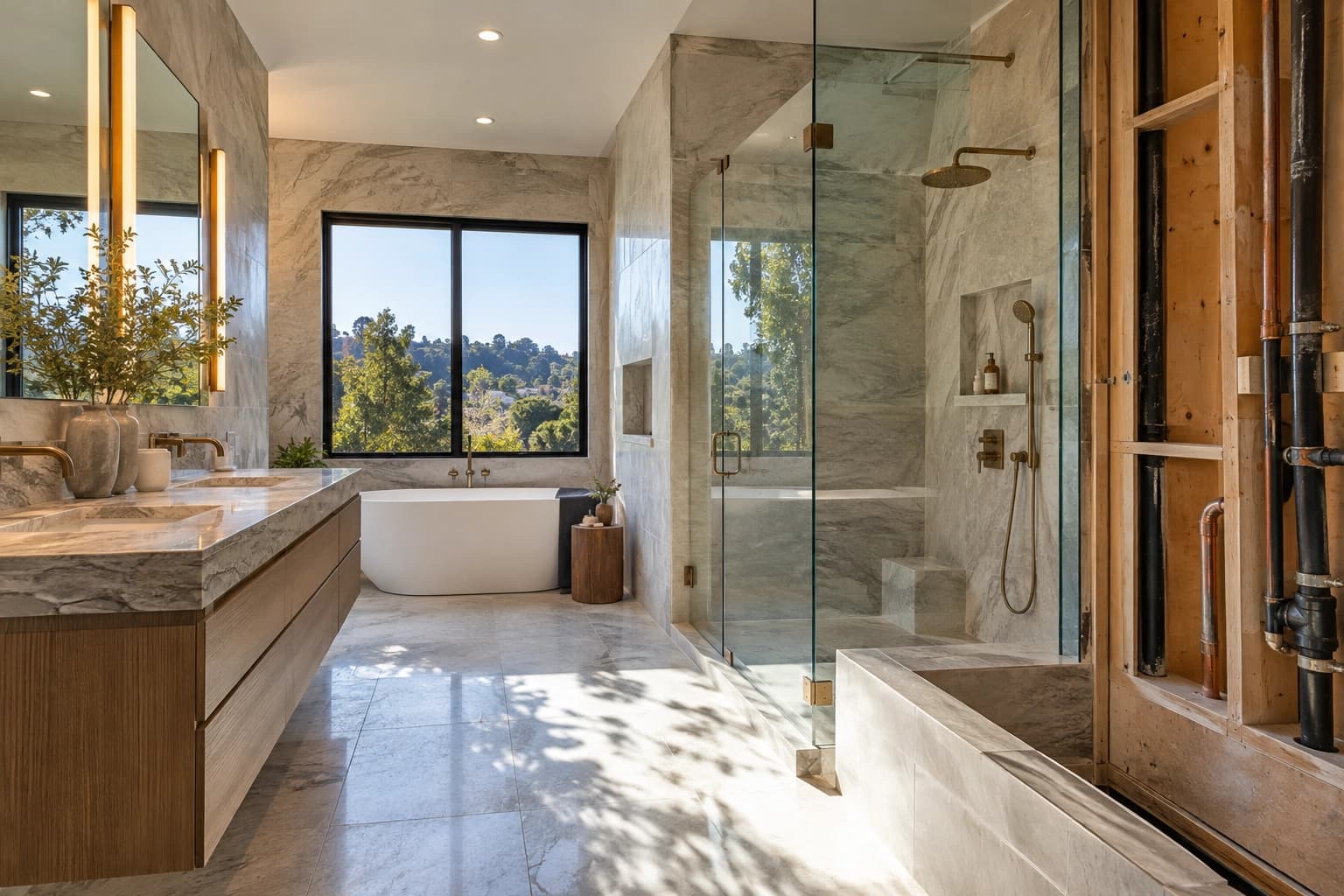
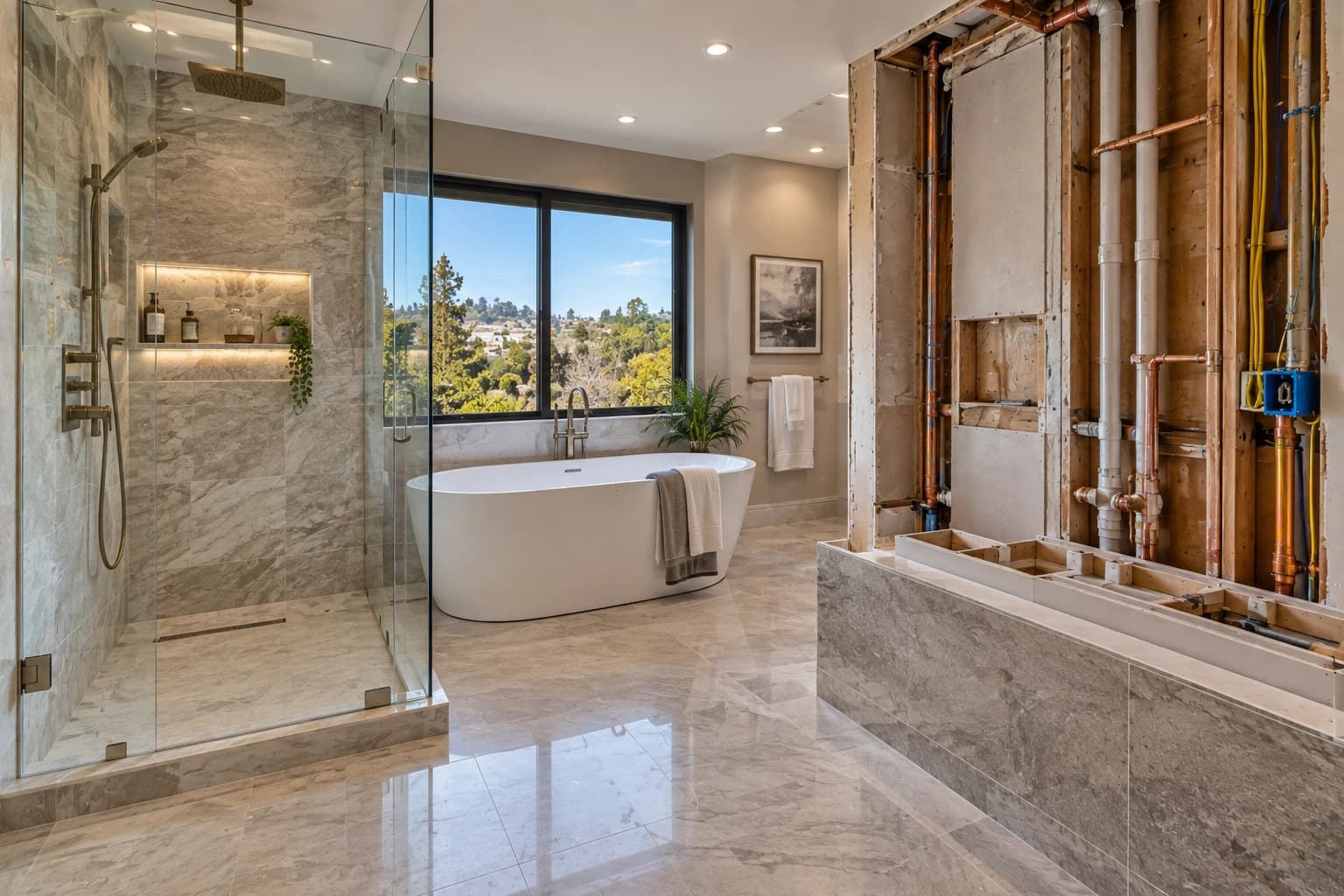
Moving a toilet, shower, bathtub, or sink can involve changes to water supply, drainage, or vent piping. These changes may require plumbing permits and inspections.
For example, replacing a shower in the same location can be different from moving the shower to another wall. The second project may require changes to the plumbing system, making permitting more important.
A new or replacement shower pan can also require a plumbing permit under LADBS guidance.
Adding or Altering Electrical Work
Electrical changes are another common reason a bathroom renovation may require a permit. This can include adding new wiring, outlets, lighting, switches, or circuits.
Bathroom electrical work also has safety requirements because bathrooms combine electrical systems with water and moisture. If your remodel includes new lighting, relocated outlets, or other wiring changes, the electrical portion should be reviewed for the appropriate permit requirements.
Removing Walls or Making Structural Changes
Removing or modifying a wall can significantly change the permitting requirements for a project. This is especially important if the wall is load-bearing or if the work changes the building's structural framing.
A bathroom remodel that stays within the existing walls may be eligible for a simpler permit process, while structural changes can require plans, review, and additional inspections.
Replacing a Shower or Tub
Replacing a tub or shower does not always mean the entire project follows the same permitting path. The details matter.
A simple replacement that leaves plumbing, electrical systems, and structural components unchanged may be handled differently from a project that moves the fixture, replaces the shower pan, changes plumbing, or alters walls.
Because shower and tub work can involve waterproofing, plumbing, and building requirements, the scope should be reviewed before construction starts.
Changing Bathroom Layouts or Room Size
Changing the bathroom layout can involve several regulated systems at once. Moving fixtures, relocating walls, changing door openings, or expanding the bathroom can affect plumbing, electrical, structural, and building requirements.
This is where professional project planning becomes particularly useful. A contractor experienced with bathroom remodeling Los Angeles projects can identify which parts of the proposed design may require permits before work begins.
What Bathroom Remodeling Work May Not Require a Permit?
Not every bathroom update requires the same level of permitting. Cosmetic improvements that do not alter regulated building systems may have fewer permit requirements, but homeowners should not assume that a project is exempt simply because it looks minor.
Examples of work that may be treated differently can include surface-level improvements that do not involve structural, plumbing, or electrical changes. However, the specific rules depend on the work and the property's jurisdiction.
The City of Los Angeles provides an express permit category for residential kitchen and bathroom remodels when there are no structural changes. This is important because an express permit is still a permit; it simply allows qualifying work to move through a more streamlined process.
If you are unsure whether your planned renovation needs a permit, it is better to verify before starting demolition. Requirements can also differ between the City of Los Angeles and other cities or jurisdictions throughout Los Angeles County.
How the Bathroom Remodeling Permit Process Works in Los Angeles
The permitting process depends on the project's scope, but it generally begins with defining the work clearly and determining which approvals are required.
Prepare Plans and Project Details
Start by documenting what will change. This can include the bathroom layout, fixtures being replaced or relocated, plumbing modifications, electrical work, wall changes, and other construction details.
For more involved projects, drawings or plans may be required for review. A clearly defined scope also makes it easier to determine whether the project qualifies for an express permit.
This planning stage is one reason homeowners often benefit from working with an experienced contractor. For homeowners still planning the design, details such as ceiling treatments can also affect the finished space.
Submit the Permit Application
Once the project scope and required documentation are prepared, the permit application can be submitted to the appropriate local building department.
For properties within the City of Los Angeles, LADBS handles building safety and permitting functions. Some qualifying residential bathroom remodels with no structural changes may be eligible for an express permit rather than a conventional plan-check process.
The important point is that the permit process should be addressed before work requiring approval begins.
Complete Required Inspections
Permits are not simply paperwork. Inspections allow the appropriate authorities to verify that permitted work has been completed according to applicable requirements.
Depending on the scope, inspections may address plumbing, electrical, structural, or other portions of the renovation. Your contractor should understand when inspections are required and coordinate the work so that covered components can be inspected at the appropriate stages.
Good project planning also helps keep the construction schedule organized. The expected duration of a project can vary based on its size and complexity.

How Much Does a Bathroom Remodeling Permit Cost in Los Angeles?
There is no single bathroom permit cost for every Los Angeles renovation. Fees can vary depending on the type and scope of work, the permits involved, and the valuation or other factors used by the applicable building department.
For example, plumbing permit fees can differ depending on whether fixtures are being installed, replaced, or other plumbing work is being performed. LADBS publishes separate fee schedules for different permit categories.
Because permit costs are only one part of a remodeling budget, homeowners should consider them alongside demolition, materials, labor, fixtures, design, and any required inspections.
Rather than relying on a generic online estimate, ask for the permit costs associated with your specific scope of work before construction begins.
What Happens If You Remodel a Bathroom Without the Required Permit?
Skipping a required permit can create problems that extend beyond the initial renovation. If unpermitted work is discovered, the property owner may be required to correct the violation, obtain permits, or remove work and restore the property in certain circumstances.
LADBS states that the current property owner remains responsible for complying with an order involving unpermitted work, even when the work was performed by a previous owner or tenant.
Unpermitted work can also make a future sale, inspection, refinance, or additional renovation more complicated because there may be no official record showing that the work was legally established.
For that reason, permit compliance should be treated as part of the remodeling process rather than an optional administrative step. If you discover existing unpermitted bathroom work, address the situation with the appropriate building department or a qualified professional before making additional changes.
Conclusion
A bathroom remodeling permit in Los Angeles may be required depending on what you are changing. Plumbing, electrical, structural modifications, relocated fixtures, and other construction work can trigger permit or inspection requirements, while certain residential bathroom remodels without structural changes may qualify for an express permit.
The best approach is to establish the complete project scope before construction begins and verify which permits apply to the property. A well-planned permitting process can help keep the renovation compliant, organized, and easier to manage from design through completion.
If you are planning a renovation, Goldenline Construction can help you evaluate the scope and move through the consultation, permitting, and construction stages. You can contact Goldenline Construction to discuss the next steps.